

Learning data exists in every LMS. However, without clarity, that data often goes unused. Custom LMS dashboards help organizations turn raw learning data into clear, useful insights that improve decisions, performance, and outcomes.In many organizations, learning teams collect large volumes of data but struggle to interpret it. Reports feel disconnected, trends are hard to spot, and critical signals often get buried. Because of this, training decisions rely more on assumptions than evidence.
Instead of scanning long reports or exporting spreadsheets, learning teams see what matters most at a glance. As a result, training becomes measurable, actionable, and aligned with business goals. Moreover, stakeholders gain confidence because insights are transparent and easy to understand. When learning visibility improves, teams can act faster, adjust content sooner, and show real impact across the organization.
Request a demo to see how custom LMS dashboards bring learning data into focus.
What You’ll Learn in This Guide
In this article, we’ll explore:
- How dashboards improve learning visibility
- Why reporting matters for training decisions
- How visualization simplifies complex data
- What user tracking reveals about engagement
- Where custom dashboards fit into modern LMS strategies
- You can also explore real-world reporting examples in the Red Chip Solutions portfolio.
Why Custom LMS Dashboards Matter for Learning Teams
Standard LMS reports often show too much data and too little meaning. Custom LMS dashboards solve this by showing only what different stakeholders need. For example, L&D managers may focus on completion and assessment scores. Meanwhile, business leaders want progress, trends, and risk areas. By tailoring views, dashboards reduce confusion and save time. More importantly, they support faster and better decisions.
Reporting That Drives Better Training Decisions
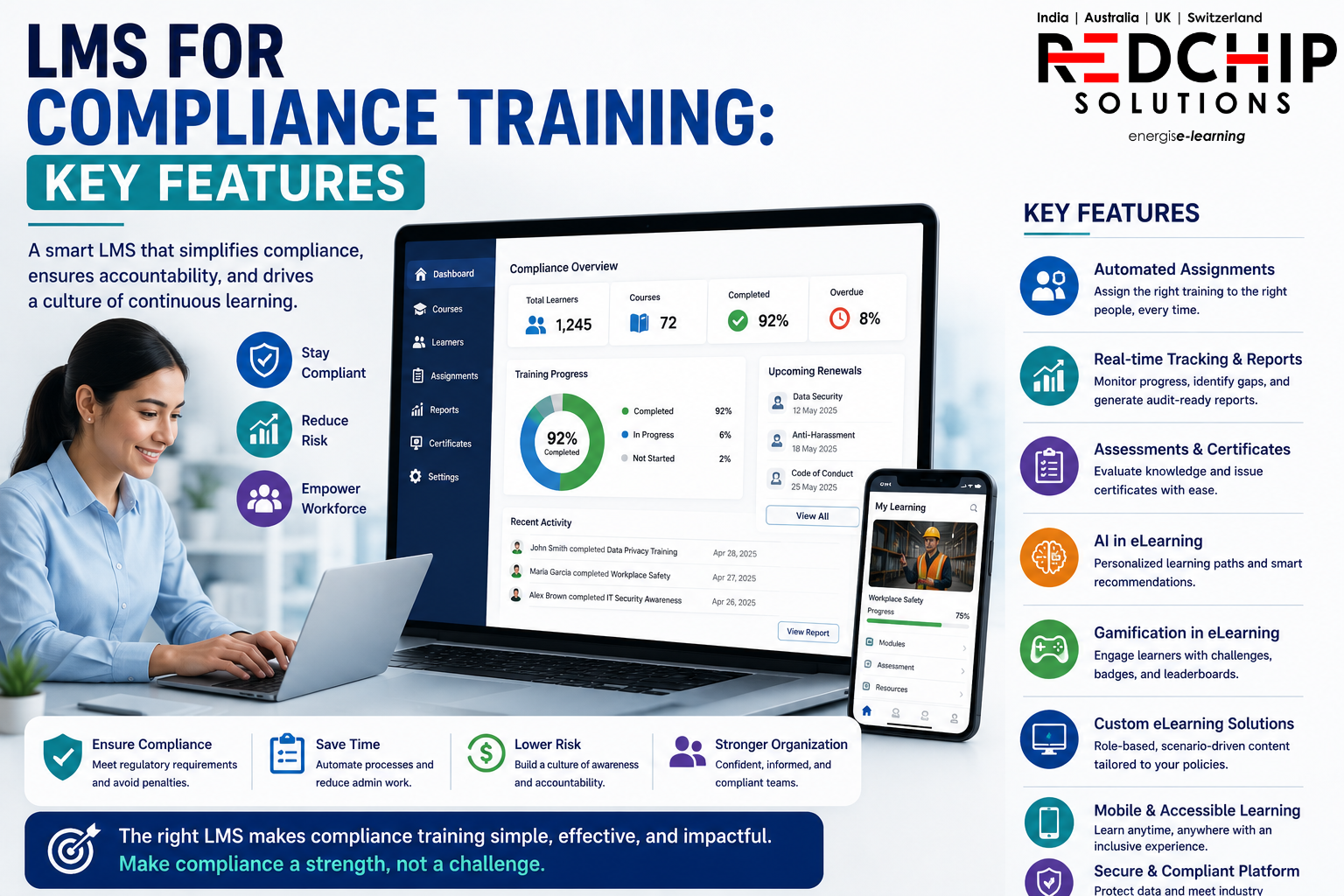
Accurate reporting is the foundation of effective learning programs. With custom LMS dashboards, teams track real-time data instead of waiting for static reports. Completion rates, quiz scores, and course usage appear instantly. As a result, gaps are identified early, and content can be improved quickly.
According to eLearning Industry, data-driven learning programs show higher engagement and better outcomes when insights are accessible.
Visualizing Learning Data Clearly
Charts, graphs, and progress bars simplify complex learning data. Instead of reading rows of numbers, users see patterns instantly. For example, heat maps highlight low engagement areas. Trend lines show improvement over time. Because visuals reduce effort, teams interact with data more often.
This is why custom LMS dashboards rely heavily on clean and intuitive visualization.
User Tracking That Reveals Learning Behavior
User tracking goes beyond completion. It shows how learners interact with content.
Dashboards reveal:
- Time spent on modules
- Drop-off points
- Repeat attempts
- Device usage
When learning teams understand behavior, they design better experiences. Over time, this leads to stronger engagement and higher retention.
Role-Based Views for Different Stakeholders
Not everyone needs the same data. Therefore, role-based dashboards matter.
Managers may track team progress. Trainers monitor content effectiveness. Executives review overall impact. Custom LMS dashboards adapt to each role, keeping information relevant and focused.
This flexibility prevents overload and improves adoption.
Supporting Compliance and Audit Readiness
Many organizations need proof of training completion. Dashboards simplify compliance by showing certifications, expiry dates, and audit-ready reports in one place.
This is especially helpful for regulated industries where tracking accuracy matters.
Standards bodies like ISO highlight the importance of documented learning processes.
Turning Insights into Action
Data only matters when it leads to action. Dashboards help teams:
- Update weak content
- Support struggling learners
- Measure training ROI
- Align learning with performance
Because insights are visible, improvements happen faster. As a result, learning stays relevant and effective.
When to Invest in Custom LMS Dashboards
Custom dashboards add value when:
- Standard LMS reports feel limiting
- Stakeholders need different views
- Learning impacts business results
- Data-driven decisions are a priority
In these cases, custom LMS dashboards become a strategic asset, not just a feature.
Conclusion: Why Custom LMS Dashboards Power Smarter Learning
Learning success depends on visibility. Custom LMS dashboards transform scattered data into meaningful insights that guide better decisions. With clear reporting, smart visualization, and detailed user tracking, organizations gain full control over learning performance.
When insights are easy to access, learning becomes measurable, adaptable, and aligned with real goals.
Request a demo to see how tailored LMS dashboards can support smarter learning decisions.