
Workplace risks are becoming more complex, and regulations continue to change. Because of this, organizations need a smarter way to train employees. AI safety training helps companies move beyond one-time sessions and build continuous, personalized learning.
With AI in eLearning, training adapts based on employee performance, behavior, and risk exposure. As a result, learners receive targeted support where they need it most. This improves knowledge retention, reduces incidents, and supports long-term compliance.
Discover how AI-driven safety learning works for your teams request a demo to get started.
What You’ll Learn About AI Safety Training
This article explains how organizations can improve compliance using:
- Why AI Safety Training Improves Compliance Outcomes
- Custom eLearning Solutions for Workplace Risk Management
- Gamification in eLearning for higher engagement
- The eLearning design process for compliance success
- eLearning content development and providers
- A scalable eLearning platform for tracking and reporting
You can also explore real implementations in the Red Chip Solutions portfolio.
Why AI Safety Training Improves Compliance Outcomes
Traditional safety programs often rely on annual training. However, employees forget information over time. Meanwhile, operational risks keep evolving. Therefore, continuous learning is essential.
AI safety training analyzes assessment scores, behavior patterns, and learning gaps. Then, it delivers focused refreshers automatically. For example, if a team shows repeated errors in equipment handling, the system assigns targeted lessons. As a result, organizations prevent incidents instead of reacting to them.
Regulatory bodies such as the Occupational Safety and Health Administration (OSHA) recommend ongoing training and documentation.
Custom eLearning Solutions for Workplace Risk Management
Every workplace has unique risks. Because of this, generic courses often fail to address real challenges. Custom eLearning solutions allow organizations to align safety training with their actual processes, equipment, and compliance needs.
Through structured eLearning content development, companies can include real scenarios, role-based workflows, and industry standards. In addition, experienced eLearning content providers ensure accuracy and regulatory alignment. Consequently, training becomes practical and relevant for employees.
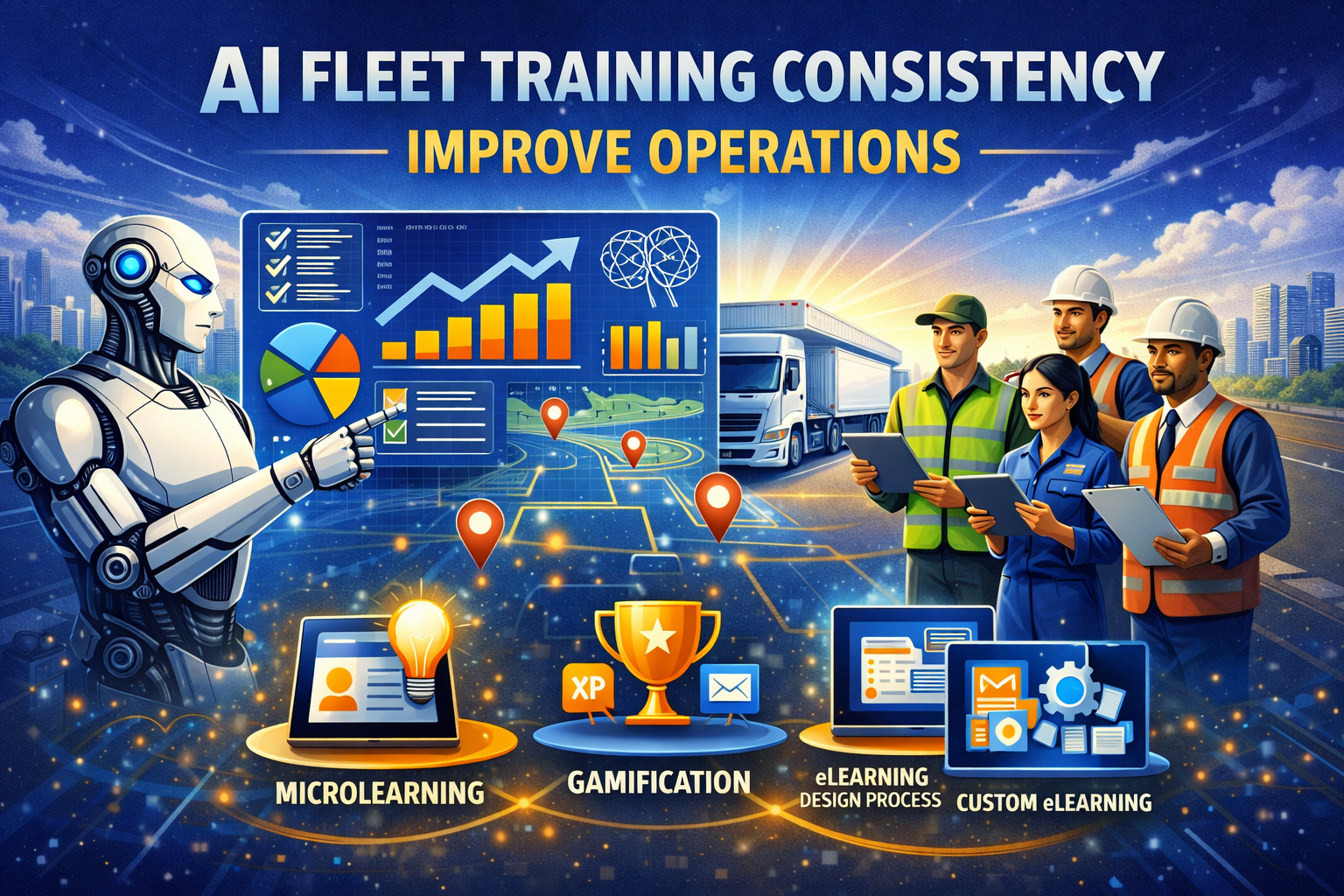
Microlearning Modules for Continuous Safety Awareness
Long training sessions can overwhelm learners. Therefore, many organizations now use microlearning modules within their AI safety training strategy.
These short lessons help employees:
- Review safety procedures quickly
- Learn from real incident scenarios
- Stay updated with compliance changes
Because learning happens in small steps, retention improves. Moreover, content can be updated instantly when risks or policies change.
Gamification in eLearning to Strengthen AI Safety Training Engagement
One major challenge in compliance training is low engagement. However, gamification in eLearning makes AI safety training more interactive and motivating.
Organizations can use:
- Leaderboards for safety performance
- Rewards for course completion
- Scenario-based challenges for decision making
As a result, employees participate actively instead of completing training only to meet requirements.
The eLearning Design Process Behind Effective AI Safety Training
Technology alone is not enough. A strong eLearning design process ensures that safety training delivers measurable results.
First, learning experts identify critical safety risks and required behaviors. Next, structured learning paths are created for different roles and locations. Meanwhile, AI monitors progress, identifies risk trends, and adjusts content automatically.
Global frameworks such as ISO standards also emphasize structured training and continuous improvement
Managing AI Safety Training with a Scalable eLearning Platform
A modern eLearning platform allows organizations to deliver safety training across multiple teams and locations. In addition, it provides real-time visibility into compliance status.
Key benefits include:
- Automated tracking and audit reports
- Personalized learning paths
- Mobile access for field employees
- Instant updates for new safety guidelines
Research from McKinsey & Company shows that AI-driven learning and analytics improve operational performance and reduce risk:
Conclusion: Building a Safer Workplace with AI Safety Training
Safety and compliance require continuous attention. However, traditional programs often lack visibility and engagement. AI safety training enables organizations to deliver personalized learning, monitor performance, and address risks before incidents occur.
By combining custom eLearning solutions, microlearning modules, and gamification in eLearning, companies create effective and engaging training experiences. When supported by strong eLearning content development and a reliable eLearning platform, safety learning becomes scalable, measurable, and future-ready.
If you want to reduce risk, improve compliance, and strengthen workforce readiness, now is the right time to modernize your approach.
Request a demo today to see how AI-powered training can transform your organization.