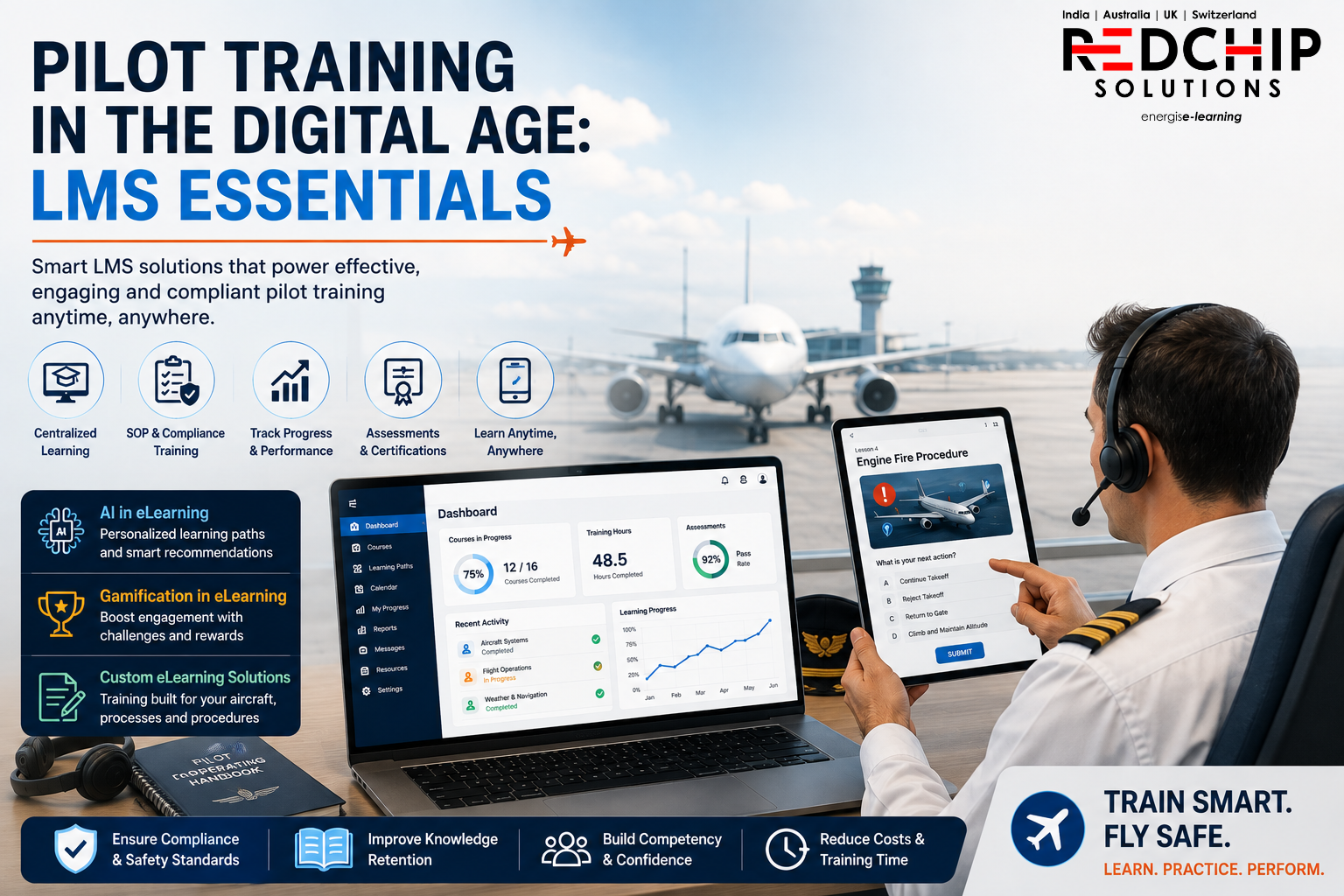


AI aviation training is changing how airlines, aviation academies, and ground operations teams build skills at scale. As aviation becomes more complex and highly regulated, training programs must be faster, smarter, and more consistent. That is exactly where AI in eLearning and modern digital learning strategies are making a real difference.
Today, AI aviation training helps organizations improve safety, reduce time, and deliver better learning experiences across roles. From pilots and cabin crew to maintenance and airport staff, AI-powered learning ensures the right knowledge reaches the right person at the right time. To support this shift, many aviation organizations rely on custom eLearning solutions that combine intelligent technology with strong learning design.
Request a demo to see how AI-driven aviation training can work for your teams.
What You’ll Learn in This Blog
In this article, you’ll explore:
- How AI aviation training improves learning outcomes
- Why the eLearning design process matters in aviation
- How microlearning modules fit busy flight schedules
- Where gamification in eLearning adds value
- The role of eLearning content development and providers
- How the right eLearning platform supports scale
Why AI Aviation Training Is Gaining Momentum
AI aviation training is growing because traditional training models struggle to keep up. Manuals are lengthy, classroom sessions are hard to schedule, and updates take time. However, aviation cannot afford delays or knowledge gaps.
With AI in eLearning, training programs adapt quickly. Learners receive personalized recommendations, targeted refreshers, and real-time feedback. As a result, training becomes more relevant and easier to apply on the job.
According to IATA, digital learning and AI are becoming essential for maintaining global aviation safety standards.
AI Aviation Training and the eLearning Design Process
A strong eLearning design process is the foundation of effective aviation training. AI alone does not improve learning unless the content is structured correctly.
First, learning objectives are mapped to aviation roles. Then, AI helps analyze performance gaps and learner behavior. As a result, training paths become clearer and more focused.
Because aviation rules change often, AI also supports faster updates without rebuilding entire courses. This keeps compliance training accurate and current.
Microlearning Modules in AI Aviation Training
AI aviation training works best when content is delivered in short, focused formats. That is why microlearning modules play a key role.
Instead of long sessions, learners access quick lessons on procedures, safety checks, or service standards. Consequently, learning fits into tight flight schedules and shift work.
Moreover, microlearning modules make it easier to update small content pieces, which is critical in regulated environments.
Gamification in eLearning for Aviation Teams
Gamification in eLearning brings engagement into aviation training without reducing seriousness. Aviation learners often deal with high-pressure roles, so motivation matters.
Through quizzes, scenario-based challenges, and progress tracking, gamification encourages participation. More importantly, the benefits of gamification in corporate learning include better retention and faster recall during real situations.
When combined with AI, gamified elements adapt to skill levels, ensuring learners stay challenged but not overwhelmed.
AI Aviation Training and eLearning Content Development
As training programs expand, eLearning content development becomes more complex. AI training supports content teams by analyzing what works and what does not.
Data insights help improve course structure, remove unnecessary content, and strengthen weak areas. Over time, learning quality improves without increasing development effort.
This approach also allows aviation organizations to scale training across regions while maintaining consistency.
The Role of eLearning Content Providers in Aviation
Many aviation organizations partner with experienced eLearning content providers to support aviation training. These providers bring industry knowledge, compliance expertise, and proven design models.
When aligned with AI systems, external content blends seamlessly into internal training programs. Learners benefit from high-quality material without switching platforms.
ICAO highlights the importance of standardized digital learning across aviation training programs.
Choosing the Right eLearning Platform for AI Aviation Training
A reliable eLearning platform is essential for managing Aaviation training at scale. The platform must support analytics, personalization, reporting, and content integration.
When platforms are designed well, learners navigate content easily, and administrators gain clear visibility into progress and compliance.
To see how this comes together in practice, explore our work here View Red Chip Solutions portfolio
Conclusion: Why AI Aviation Training Delivers Long-Term Value
AI aviation training is no longer optional. It helps aviation organizations train faster, adapt quickly, and maintain high safety standards. By combining custom eLearning solutions, AI in eLearning, microlearning modules, and strong content development, training becomes more effective and future-ready.
Most importantly, when supported by the right eLearning platform and trusted eLearning content providers, AI aviation training delivers measurable business and learning impact.
If you’re ready to modernize your aviation training programs, now is the right time. Request a demo and discover how AI-powered aviation learning can support your goals.