
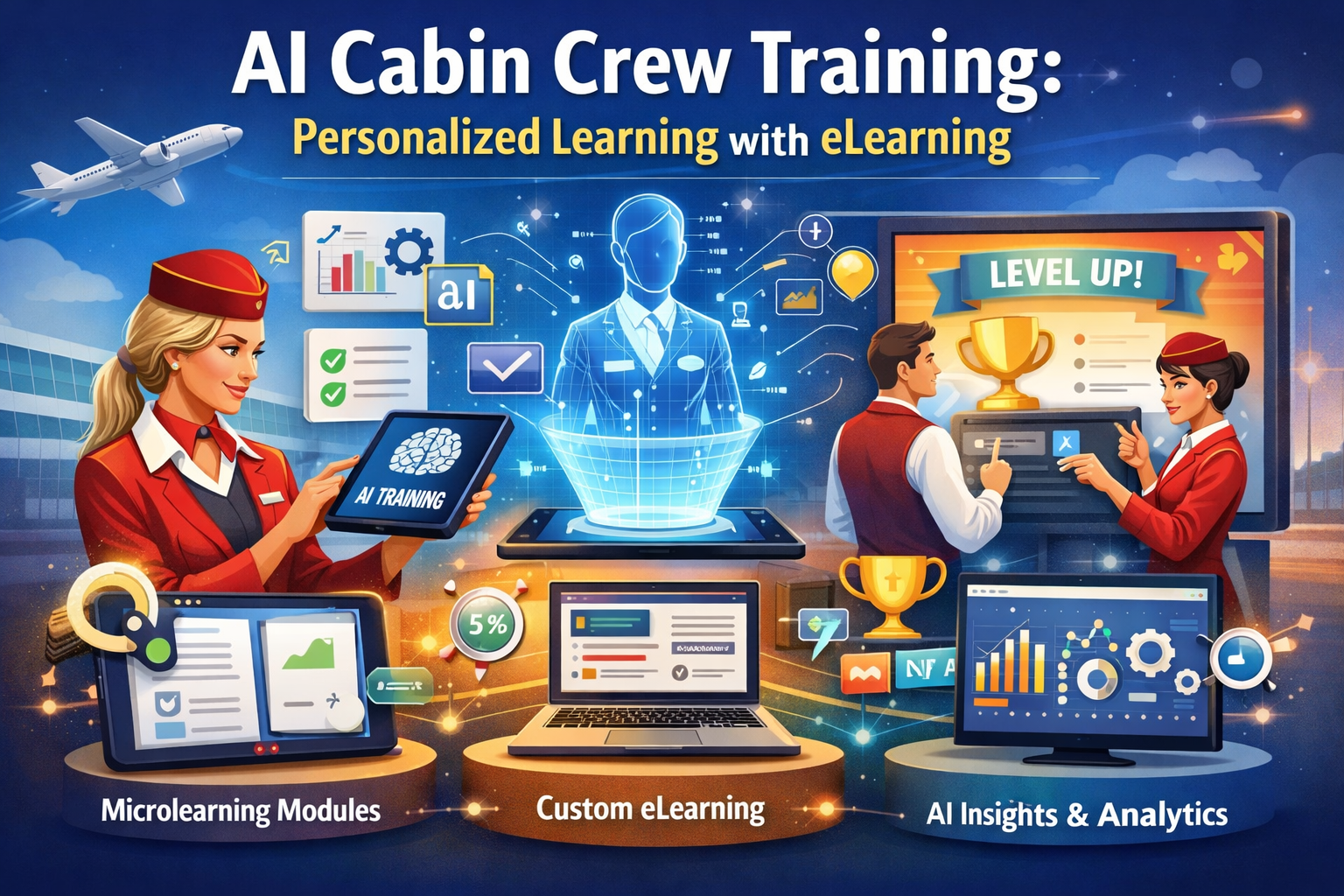
Using AI to personalize cabin crew training is becoming essential as airlines face higher safety standards, evolving passenger expectations, and frequent regulatory updates. Traditional one-size-fits-all training often fails to address individual skill gaps, leading to inconsistent service delivery and compliance risks.
That is where AI in eLearning and custom eLearning solutions play a critical role. By combining performance data, learning behavior, and a scalable eLearning platform, airlines gain clear visibility into crew readiness. As a result, training becomes targeted, relevant, and aligned with real inflight scenarios.
Requesting for a Demo and see how AI-driven learning can personalize cabin crew training at scale.
What This Blog Covers About AI-Personalized Cabin Crew Training
In this blog, you’ll understand:
- Why using AI to personalize cabin crew training improves safety and service
- How the eLearning design process supports role-based aviation training
- Where microlearning modules fit into cabin crew skill development
- How gamification in eLearning increases training engagement
- The role of eLearning content development and providers in aviation
- How an eLearning platform turns training data into action
You can also explore real implementations here Red Chip Solutions portfolio.
Why Using AI to Personalize Cabin Crew Training Improves Performance
Using AI to personalize cabin crew training helps airlines move away from generic refresher programs. Traditional methods often assume equal skill levels across crew members, which is rarely the case.
However, when AI in eLearning analyzes assessments, incident data, and learning patterns, it highlights individual and group skill gaps. Therefore, airlines can focus training on safety procedures, service recovery, and compliance where it matters most.
Global aviation bodies such as IATA’s competency-based training and assessment (CBTA) framework emphasize continuous, data-driven cabin crew training to improve safety and service standards.
Using AI to Personalize Cabin Crew Training Through the eLearning Design Process
A structured eLearning design process ensures that insights from AI are translated into effective learning experiences. Without proper design, personalization remains theoretical.
First, cabin crew roles and competencies are mapped clearly. Then, learning paths are created based on inflight scenarios, aircraft types, and regulatory needs. As a result, training becomes practical, consistent, and audit-ready.
Microlearning Modules for Personalized Cabin Crew Training
Microlearning modules are a natural fit when using AI to personalize cabin crew training. Cabin crew operate under tight schedules, making long training sessions impractical.
These short modules focus on safety drills, service protocols, and emergency handling. Consequently, crew members can learn in short bursts without disrupting rosters. Moreover, microlearning modules are easy to update when procedures change.
Gamification in eLearning for Cabin Crew Engagement
Gamification in eLearning improves participation in cabin crew training programs. Repetitive compliance training often leads to low engagement.
By using challenges, scores, and real-life inflight scenarios, gamification in eLearning keeps learners motivated. When combined with AI in eLearning, the system adjusts difficulty based on individual performance, improving retention and confidence.
Using AI in eLearning for Predictive Crew Readiness
AI in eLearning supports predictive training by identifying future skill needs. Using AI to personalize training allows airlines to prepare crews before new routes, aircraft, or service standards are introduced.
Therefore, training becomes proactive rather than reactive. This approach reduces safety incidents and supports smoother operational changes.
According to research from McKinsey on AI in operations and workforce transformation, organizations using AI-driven learning analytics improve readiness and reduce operational risk.
eLearning Content Development Based on Cabin Crew Data
eLearning content development becomes more effective when driven by AI insights. Instead of generic aviation courses, content focuses on real cabin scenarios and passenger interactions.
As a result, training stays relevant and aligned with airline standards. Over time, this data-led approach improves service consistency and safety outcomes.
Role of eLearning Content Providers in Aviation Training
Experienced eLearning content providers understand aviation regulations, crew workflows, and audit requirements. When using AI to personalize cabin crew training, their expertise helps scale programs across fleets and geographies.
International regulations defined by ICAO competency-based training standards highlight the need for structured, measurable, and role-specific cabin crew training.
Choosing the Right eLearning Platform for Cabin Crew Training
A reliable eLearning platform is critical when using AI to personalize cabin crew training. The platform should support analytics, mobile access, offline learning, and compliance reporting.
When combined with custom eLearning solutions, it becomes a central hub for crew development. Managers gain visibility, while crew members receive timely, role-specific learning.
Conclusion: Using AI to Personalize Cabin Crew Training as a Strategic Advantage
Using AI to personalize cabin crew training enables airlines to improve safety, service quality, and compliance. By combining AI in eLearning, microlearning modules, gamification in eLearning, and a structured eLearning design process, airlines build confident and capable crews.
Supported by focused eLearning content development, trusted eLearning content providers, and a scalable eLearning platform, training becomes a continuous performance driver.
Ready to modernize cabin crew training? Request a demo to see how AI-powered, personalized eLearning can transform your airline’s training strategy.