
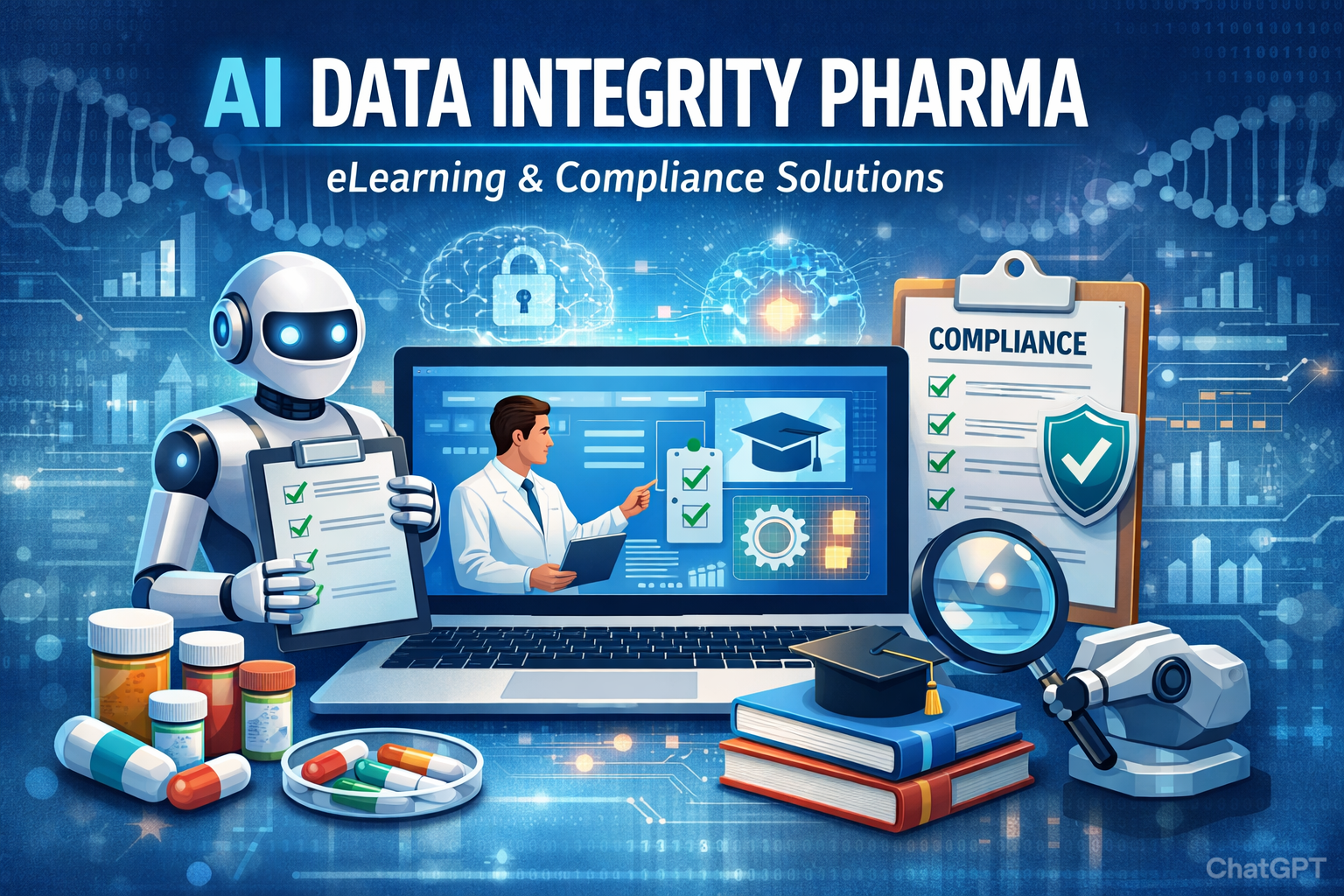
AI data integrity pharma strategies are becoming essential as regulatory audits grow stricter and compliance expectations increase. Pharmaceutical companies must ensure accurate documentation, proper SOP adherence, and audit-ready systems at all times. Therefore, structured and intelligent training programs are no longer optional.
However, traditional training methods often fail to create real behavioral change. Static PDFs and one-time workshops do not prevent repeated documentation errors. As a result, many organizations struggle with recurring audit observations.
If you want to see how structured AI-powered compliance training works in practice, you can request a demo to explore a live implementation.
What This Guide Covers
In this guide, you will learn:
- How AI Improves Regulatory Compliance in Pharma Data Integrity
- Custom eLearning Solutions for AI-Driven Data Integrity in Pharma
- Microlearning for Stronger Data Integrity in Pharma Training
- Gamification to Improve Pharma Compliance and Data Accuracy
- AI in eLearning Design for Pharma Compliance Systems
- Choosing the Right eLearning Platform for Pharma Data Integrity
You can also review implementation case studies in the Red Chip Solutions portfolio.
How AI Improves Regulatory Compliance in Pharma Data Integrity
AI-driven systems help organizations detect compliance risks early. Instead of reacting after inspections, companies can act proactively. Therefore, training becomes preventive rather than corrective.
Moreover, AI in eLearning monitors learner performance and documentation accuracy patterns. If teams repeatedly fail specific compliance assessments, the system flags them immediately. As a result, managers can assign targeted corrective modules.
In addition, structured reporting supports regulatory expectations set by the U.S. Food and Drug Administration (FDA) and the European Medicines Agency (EMA). Consequently, audit readiness improves significantly.
Custom eLearning Solutions for AI-Driven Data Integrity in Pharma
Custom eLearning solutions are central to modern compliance frameworks. Every pharmaceutical organization operates differently. Therefore, role-based and plant-specific learning paths are critical.
For example, QA teams require deviation management modules, while production teams focus on batch record accuracy. Meanwhile, regulatory affairs professionals need documentation alignment training. Because of this customization, learning becomes relevant and actionable.
Furthermore, scenario-based learning integrates real SOP examples. As a result, employees apply correct documentation standards more confidently.
If you want to evaluate how tailored learning paths can strengthen your compliance system, you may request a demo for a walkthrough.
Microlearning for Stronger Data Integrity in Pharma Training
Microlearning strengthens compliance initiatives by improving retention. Long sessions often reduce engagement. However, short and focused lessons improve recall and practical application.
For instance, quick modules on ALCOA+ principles make documentation rules easier to understand. As a result, compliance errors reduce over time.
Additionally, microlearning supports mobile access. Therefore, plant-level employees can review critical SOP guidance before executing tasks. This continuous reinforcement builds a strong compliance culture.
Gamification to Improve Pharma Compliance and Data Accuracy
Gamification in eLearning increases participation in regulated training programs. Compliance training often feels repetitive. However, gamified modules change that perception.
Leaderboards, scenario challenges, and rewards motivate employees to engage actively. Moreover, AI tracks performance and adjusts difficulty levels accordingly. Consequently, learning becomes both personalized and measurable.
Over time, this engagement improves accountability and strengthens documentation discipline across departments.
AI in eLearning Design for Pharma Compliance Systems
The eLearning design process has evolved significantly. Earlier, training relied on static presentations. Now, AI in eLearning enables adaptive learning paths and performance analytics.
Additionally, faster eLearning content development ensures that revised SOPs are updated quickly. Therefore, compliance gaps decrease significantly.
Partnering with experienced eLearning content providers ensures alignment with global standards such as ICH Guidelines. As a result, regulatory preparedness improves across the organization.
Choosing the Right eLearning Platform for Pharma Data Integrity
A strong eLearning platform supports compliance systems by providing visibility and measurable outcomes. Without centralized tracking, oversight remains weak.
The right platform should offer:
- Real-time analytics
- Compliance dashboards
- Audit-ready reports
- Integration with QMS systems
Moreover, centralized visibility ensures standardization across multiple plants. You can explore similar implementations in the Red Chip Solutions portfolio.
Conclusion: Building a Future-Ready Compliance Framework
In conclusion, AI data integrity pharma is no longer optional. Regulatory expectations continue to rise, and compliance risks are costly. Therefore, organizations must adopt intelligent and adaptive training frameworks.
Custom eLearning solutions, microlearning modules, and AI-driven analytics create measurable improvements. As a result, documentation accuracy increases and audit readiness strengthens.
If you are ready to modernize your compliance ecosystem, start by requesting a demo and explore how AI-enabled learning can support your pharma teams.