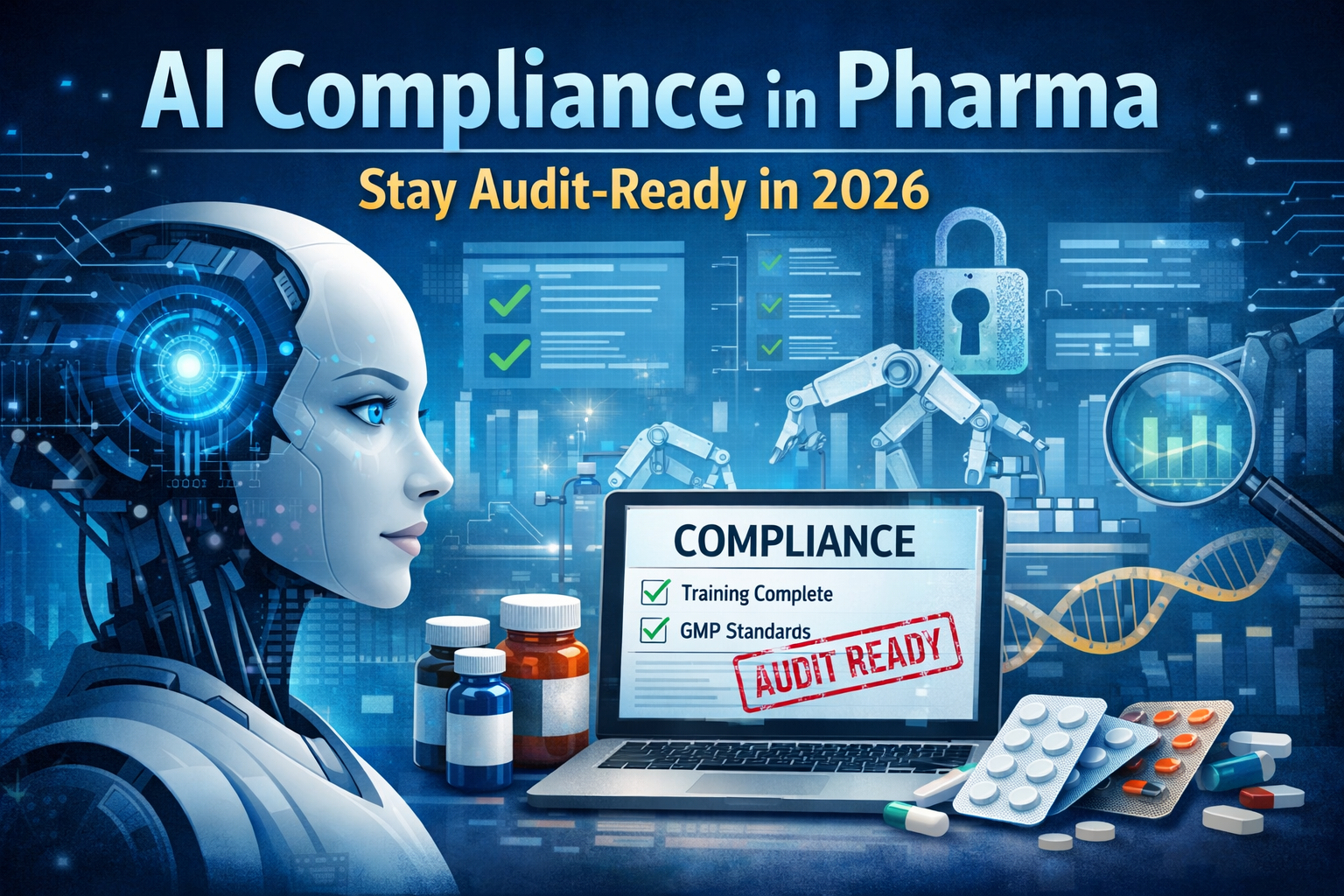

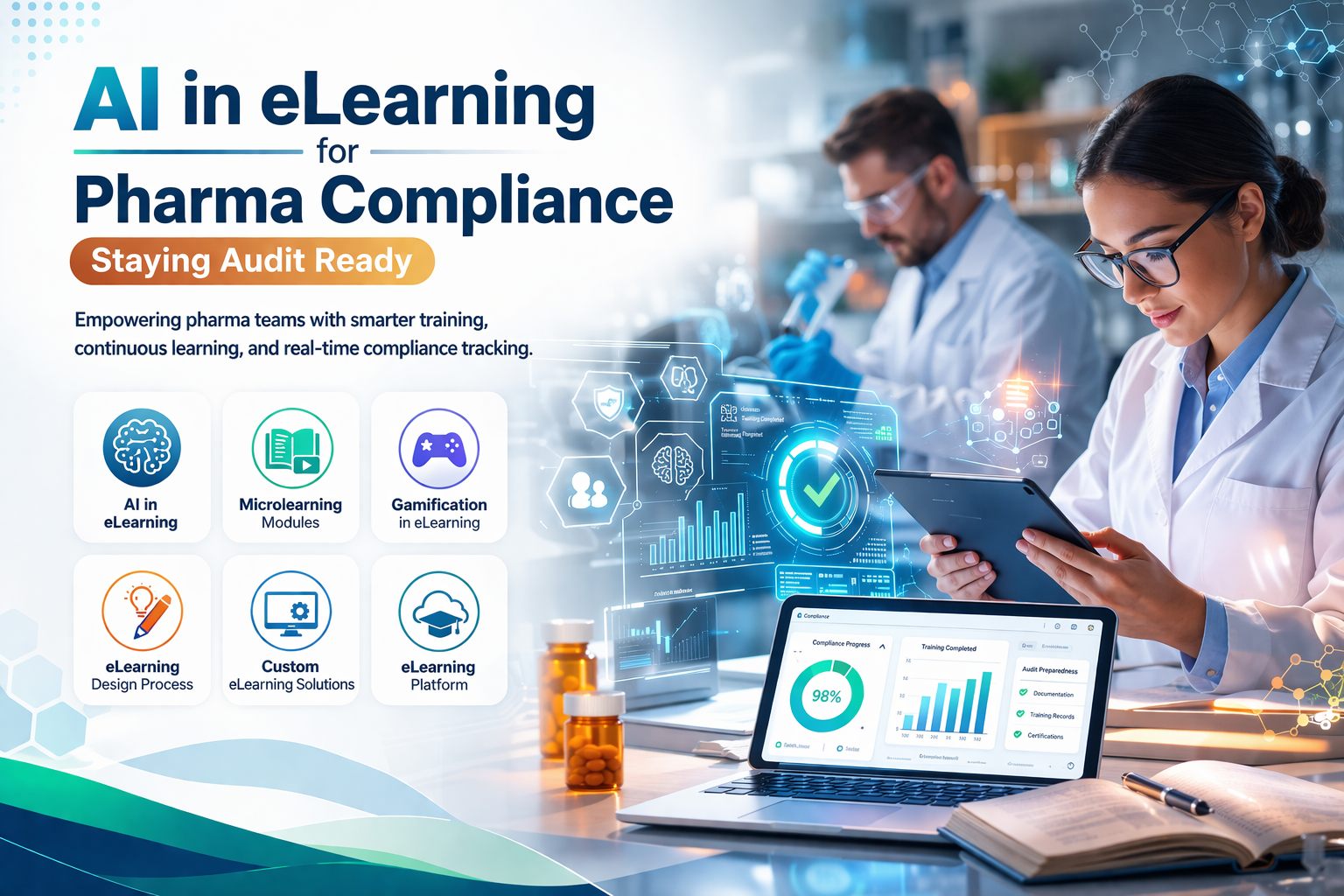
Pharmaceutical companies operate under strict regulatory standards where compliance training is critical. Because of this, AI in eLearning for Pharma Compliance is becoming a powerful solution for organizations that want to remain audit-ready at all times. Training records, employee certifications, and compliance documentation must be accurate and easy to access. However, traditional training systems often make compliance tracking slow and difficult.
Today, companies are turning to AI-powered learning systems and custom eLearning solutions to modernize their compliance training programs. These platforms automate record keeping, personalize learning, and improve reporting. As a result, pharma teams can prepare for regulatory audits with greater confidence.
Request a Demo and See how AI-powered learning solutions can support your compliance training strategy.
What this article explores
- AI in eLearning for pharma compliance
- Microlearning modules in pharma training
- Gamification in eLearning engagement
- eLearning design process for compliance
- eLearning platforms and content providers
- Custom eLearning solutions for pharma
You can also explore the Red Chip Solutions portfolio to see real training implementations.
AI in eLearning Improves Pharma Compliance Readiness
Regulatory audits require accurate documentation and trained employees. This is where AI in eLearning for Pharma Compliance plays an important role.
AI-powered learning platforms automatically track employee training progress. Because of this, compliance teams can quickly identify gaps before an audit takes place. Automated reporting also reduces the time required to prepare documentation for regulators.
Another advantage is centralized record management. Training certificates, course completions, and compliance data are stored securely within the eLearning platform. Consequently, organizations can access these records whenever auditors request them.
Global regulatory bodies such as the U.S. Food and Drug Administration (FDA) provide detailed compliance standards for pharmaceutical training and quality management.
Microlearning Modules Make Compliance Training Easier
Pharma employees often work in fast-paced environments where long training sessions are difficult to complete. For this reason, microlearning modules are becoming a preferred approach in compliance programs.
Microlearning delivers short and focused lessons that cover one concept at a time. Employees can quickly review topics such as Good Manufacturing Practices (GMP) or safety procedures.
Short lessons also improve knowledge retention. Instead of overwhelming employees with large training courses, organizations deliver practical information in smaller pieces. As a result, workers remember critical compliance rules more effectively.
When microlearning is combined with AI in eLearning, training becomes both flexible and personalized.
Gamification in eLearning Encourages Employee Participation
Compliance training sometimes feels repetitive for employees. To address this challenge, companies are introducing gamification in eLearning.
Gamification adds interactive elements such as quizzes, rewards, and leaderboards. These features motivate employees to complete training modules and improve their performance.
For example, workers may earn badges for completing compliance courses or receive points for passing assessments. Healthy competition between teams also increases participation rates.
Because of this engagement, organizations often see higher course completion rates and stronger compliance awareness.
The eLearning Design Process for Pharma Compliance Training
Developing effective compliance training requires a structured eLearning design process. The process usually begins with analyzing regulatory requirements and employee training needs.
Next, eLearning content development focuses on real-world situations employees may encounter during daily operations. Scenarios, simulations, and assessments help learners apply compliance knowledge in practice.
Instructional designers also work closely with subject matter experts. This collaboration ensures that the training content remains technically accurate and aligned with regulatory expectations.
Through this approach, companies build learning programs that support both employee development and compliance goals.
Selecting the Right eLearning Platform and Content Providers
Technology and expertise both influence the success of compliance training. Choosing the right eLearning platform ensures that organizations can manage courses, track certifications, and monitor employee progress.
A modern platform should provide features such as mobile learning, reporting dashboards, and automated certification tracking.
At the same time, experienced eLearning content providers help organizations develop industry-specific training programs. Their expertise ensures that the content reflects real regulatory requirements.
When companies combine the right technology with custom eLearning solutions, they create scalable learning systems that support long-term compliance.
Conclusion: AI in eLearning for Pharma Compliance Supports Audit Readiness
Preparing for pharmaceutical audits requires consistent training, accurate records, and strong compliance awareness. Because of this, AI in eLearning for Pharma Compliance is becoming an essential tool for modern organizations.
AI-powered platforms simplify training management while improving reporting and knowledge retention. At the same time, microlearning modules, gamification in eLearning, and structured eLearning design processes make compliance training more effective for employees.
By investing in custom eLearning solutions and expert content development, pharma companies can build scalable learning systems that keep teams audit-ready at all times.
Ready to modernize your compliance training?
If your organization wants to strengthen regulatory readiness and simplify training management, the right learning strategy can make a significant difference.
Request a Demo today and discover how our custom eLearning solutions can support your pharma compliance training.