
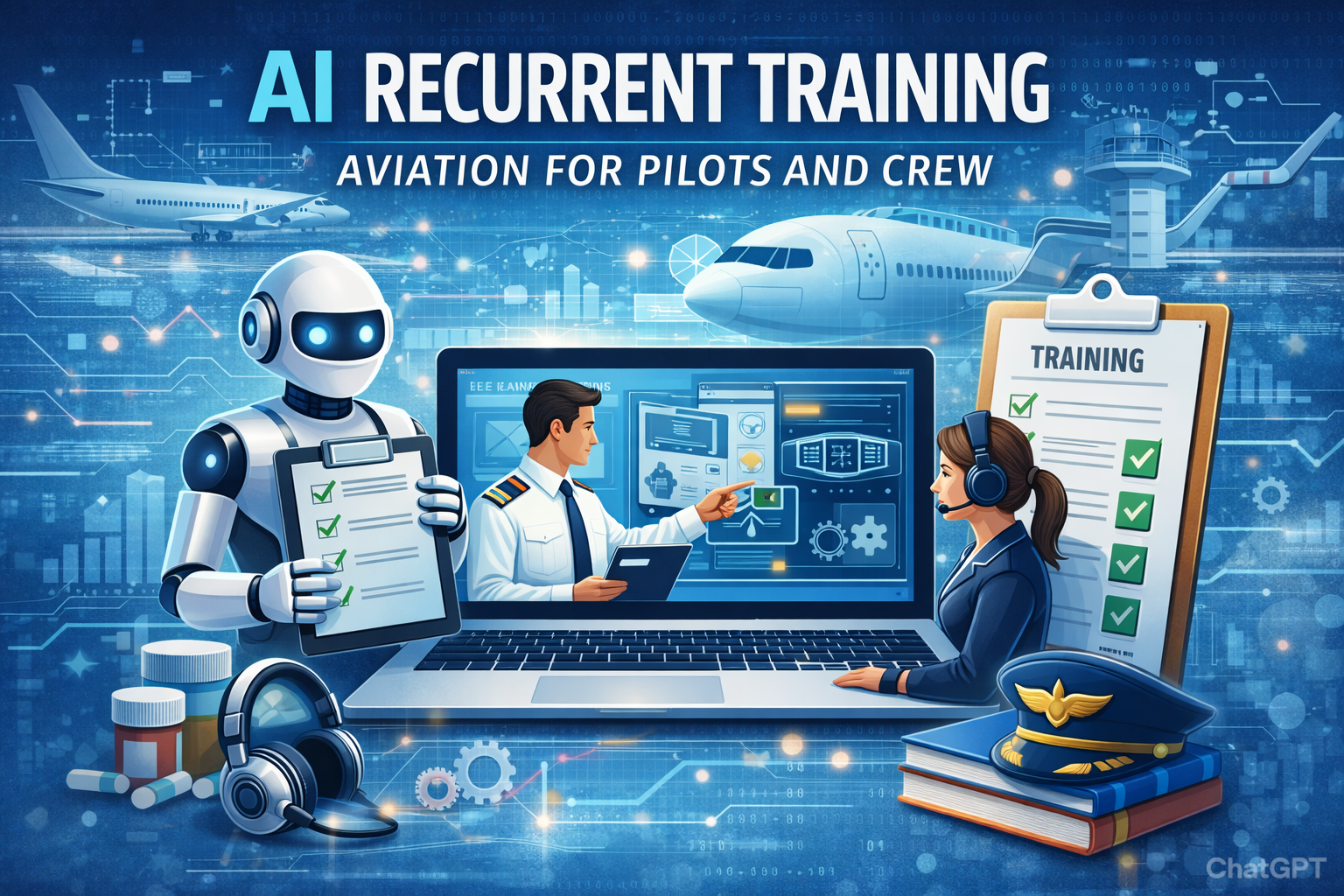
AI in recurrent training for pilots and crew is transforming aviation safety and compliance. Airlines operate in a highly regulated environment where skill refreshers, simulator sessions, and emergency drills are mandatory. However, traditional recurrent training often follows a fixed schedule instead of adapting to individual performance gaps.
As a result, airlines sometimes spend more time retraining strengths instead of correcting weaknesses. Therefore, integrating AI in eLearning creates personalized, data-driven learning paths that improve retention and operational safety.
If you would like to see how adaptive aviation training works in practice, consider requesting for a demo to explore a live walkthrough.
What This Article Covers
In this guide, you will learn:
- How AI improves recurrent aviation training
- The role of custom eLearning solutions
- Why microlearning modules improve retention
- How gamification in eLearning increases engagement
- What to look for in a scalable eLearning platform
You can also explore aviation training implementations in our Red Chip Solutions portfolio.
How AI in Recurrent Training for Pilots and Crew Improves Safety
AI in recurrent training for pilots and crew enhances performance by analyzing simulator data, assessment scores, and operational feedback. Instead of using uniform refresher programs, AI identifies individual skill gaps.
For example, if a pilot struggles with crosswind landing simulations, the system assigns targeted reinforcement modules. Similarly, cabin crew members who show gaps in emergency communication receive additional scenario-based training. As a result, training becomes precise and efficient.
Moreover, AI dashboards provide measurable training analytics. This supports compliance with global aviation authorities such as the International Civil Aviation Organization (ICAO) Consequently, audit readiness improves significantly.
Custom eLearning Solutions in AI-Driven Recurrent Training
Custom eLearning solutions are essential for AI in recurrent training for pilots and crew. Each airline has unique SOPs, fleet types, and operational routes. Therefore, standardized modules rarely address real operational needs.
Through structured eLearning content development, airlines can integrate:
- Aircraft-specific procedures
- Route-based risk scenarios
- Crew Resource Management (CRM) modules
- Emergency evacuation simulations
Furthermore, a well-defined eLearning design process ensures instructional alignment with aviation safety standards. As a result, learning becomes practical and measurable.
Microlearning Modules for Continuous Skill Reinforcement
Microlearning modules support AI in recurrent training for pilots and crew by delivering short, focused lessons. Long classroom sessions can reduce retention. However, five to ten-minute targeted refreshers increase recall and application.
For instance, quick mobile modules on weather interpretation, checklist discipline, or in-flight communication can be accessed before duty. Therefore, knowledge remains fresh.
Additionally, AI tracks which modules are accessed most frequently. As a result, training managers gain insight into operational risk areas.
Gamification in eLearning for Aviation Engagement
Gamification in eLearning increases participation and motivation in recurrent programs. Aviation professionals value measurable performance. Therefore, adding structured leaderboards and scenario-based challenges enhances engagement.
For example, interactive simulations that test emergency responses create realistic practice environments. Moreover, AI adjusts scenario difficulty based on learner performance. Consequently, both pilots and crew receive personalized challenges.
Over time, this approach strengthens accountability and improves teamwork during real operations.
AI in eLearning and the Aviation eLearning Design Process
AI in eLearning improves the overall eLearning design process by integrating performance analytics into instructional planning. Earlier, training updates relied on manual feedback cycles. Now, AI analyzes performance data automatically.
As a result, airlines can refine training modules faster. Updated SOPs, regulatory changes, and safety recommendations can be integrated quickly through structured eLearning content development.
Working with experienced eLearning content providers ensures alignment with aviation standards such as those outlined by EASA (European Union Aviation Safety Agency). Therefore, compliance risks are minimized.
Choosing the Right eLearning Platform for Recurrent Aviation Training
A robust eLearning platform is critical for AI in recurrent training for pilots and crew. Without centralized tracking, compliance reporting becomes difficult.
The right platform should include:
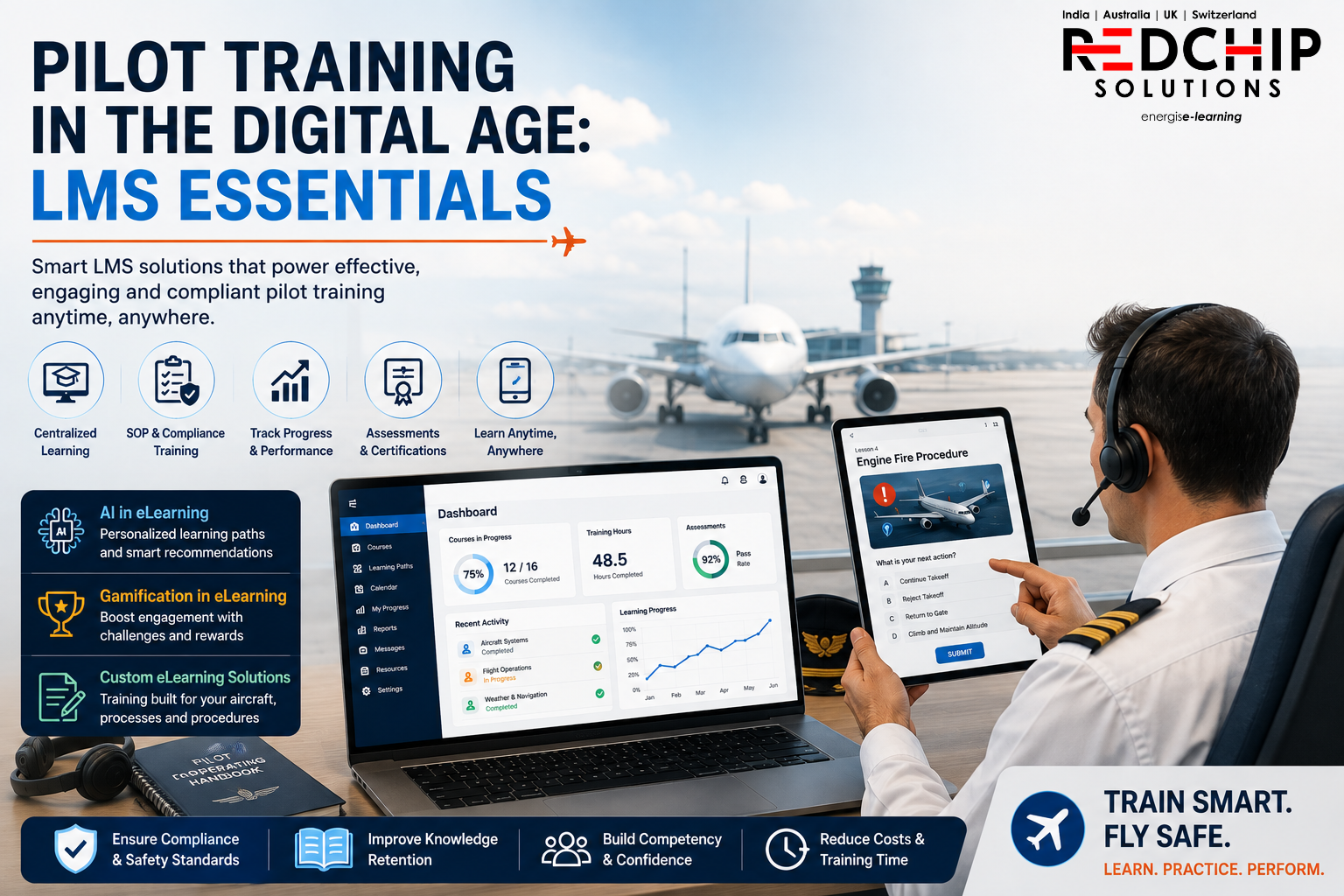
- Real-time performance dashboards
- Simulator data integration
- Certification tracking
- Role-based learning paths
- Mobile compatibility
Moreover, centralized systems ensure consistency across multiple bases and international operations. You can review similar aviation implementations in our Red Chip Solutions portfolio.
Conclusion: The Future of AI in Recurrent Training for Pilots and Crew
In conclusion, AI in recurrent training for pilots and crew is reshaping aviation learning systems. Instead of uniform retraining cycles, airlines can now adopt adaptive, data-driven approaches.
Custom eLearning solutions, microlearning modules, and gamification in eLearning create measurable improvements in safety and compliance. As a result, operational performance strengthens while training costs become more efficient.
If your airline is looking to modernize recurrent training, start by requesting for a demo and explore how AI-powered aviation learning can enhance safety and performance across your fleet.