
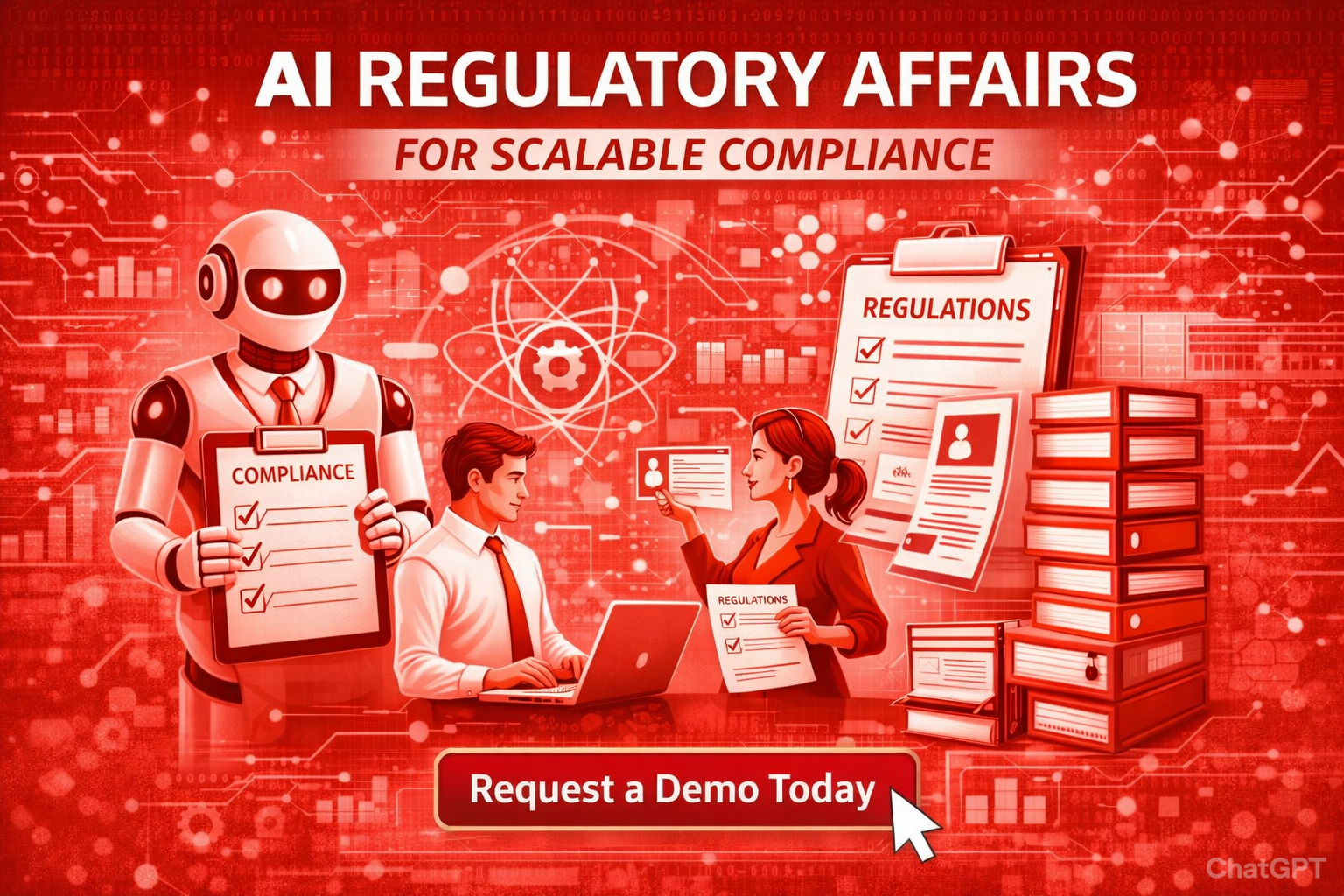
Regulatory teams today handle thousands of documents, frequent updates, and strict compliance requirements. As regulations evolve, managing submissions, approvals, and training manually becomes slow and risky. AI in Regulatory Affairs helps organizations manage documentation at scale while improving accuracy and compliance.
With AI in eLearning and smart automation, regulatory professionals can organize content, track changes, and ensure employees understand the latest requirements. As a result, organizations reduce errors, improve audit readiness, and respond faster to regulatory changes.
See how this works for your organization by requesting a demo.
What This Blog Covers
In this guide, you’ll explore:
- Why AI improves regulatory documentation management
- How the eLearning design process supports compliance learning
- Where microlearning modules help with frequent updates
- How gamification in eLearning improves adoption
- The role of eLearning content development and providers
- How an eLearning platform manages compliance at scale
You can also explore real implementation examples in the Red Chip Solutions portfolio.
Why AI in Regulatory Affairs Matters for Documentation Control
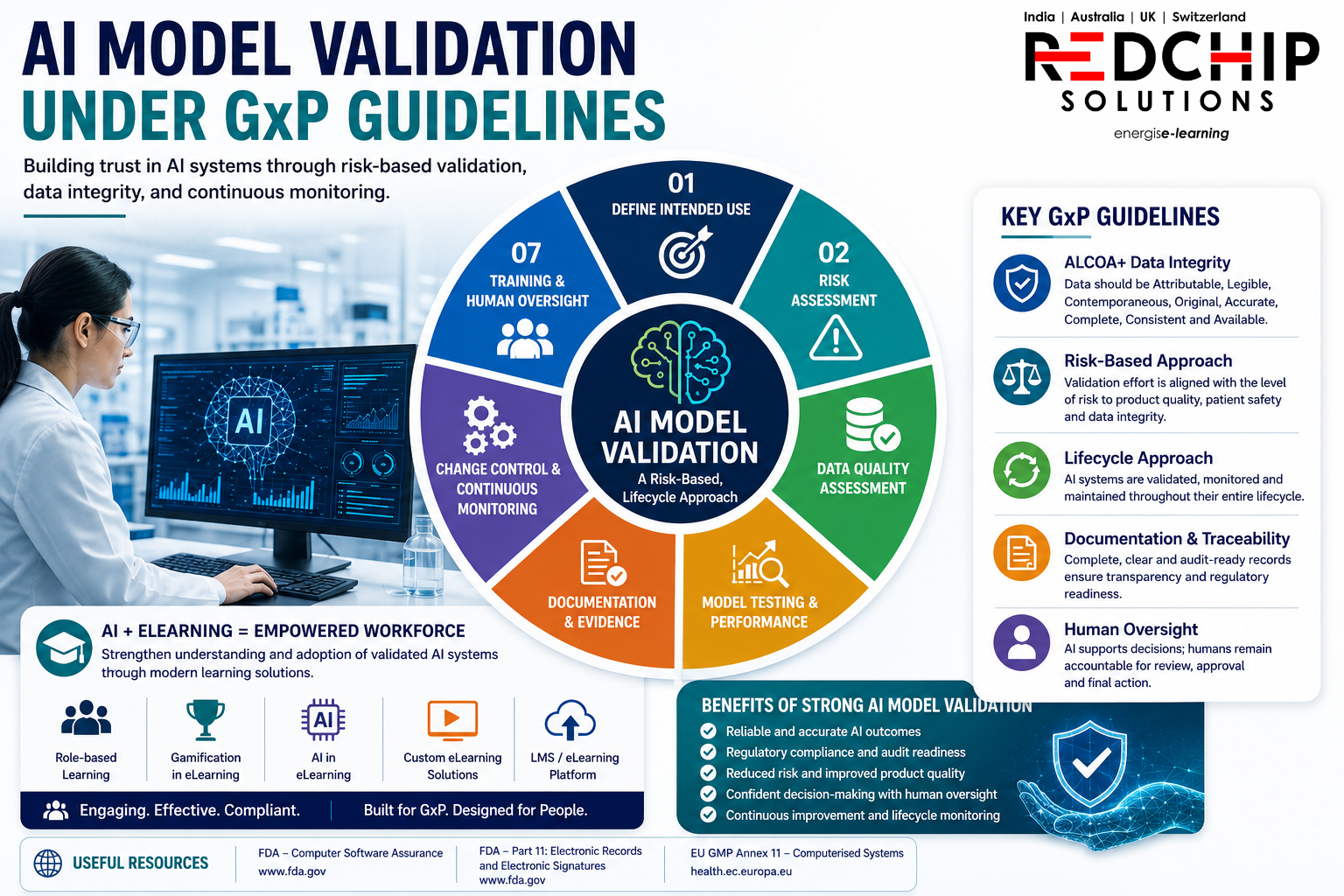
Regulatory work involves constant document creation, review, and version control. However, manual processes often lead to delays, duplicate files, or missed updates. AI in Regulatory Affairs helps by organizing large volumes of data and identifying changes automatically.
For example, AI can track document versions, flag inconsistencies, and notify teams about required updates. Therefore, regulatory teams spend less time searching and more time focusing on critical decisions.
Global regulators such as the U.S. Food and Drug Administration emphasize strong documentation control and traceability for compliance.
Custom eLearning Solutions for Regulatory Compliance Training
AI regulatory affairs requires employees to understand changing guidelines quickly. This is where custom eLearning solutions help organizations translate regulatory updates into role-based learning.
Through targeted eLearning content development, organizations can create role-based training for quality, manufacturing, clinical, or regulatory teams. In addition, experienced eLearning content providers ensure that learning content aligns with industry standards and internal processes.
As a result, regulatory changes are not just documented—they are understood and applied.
Microlearning Modules for Frequent Regulatory Updates
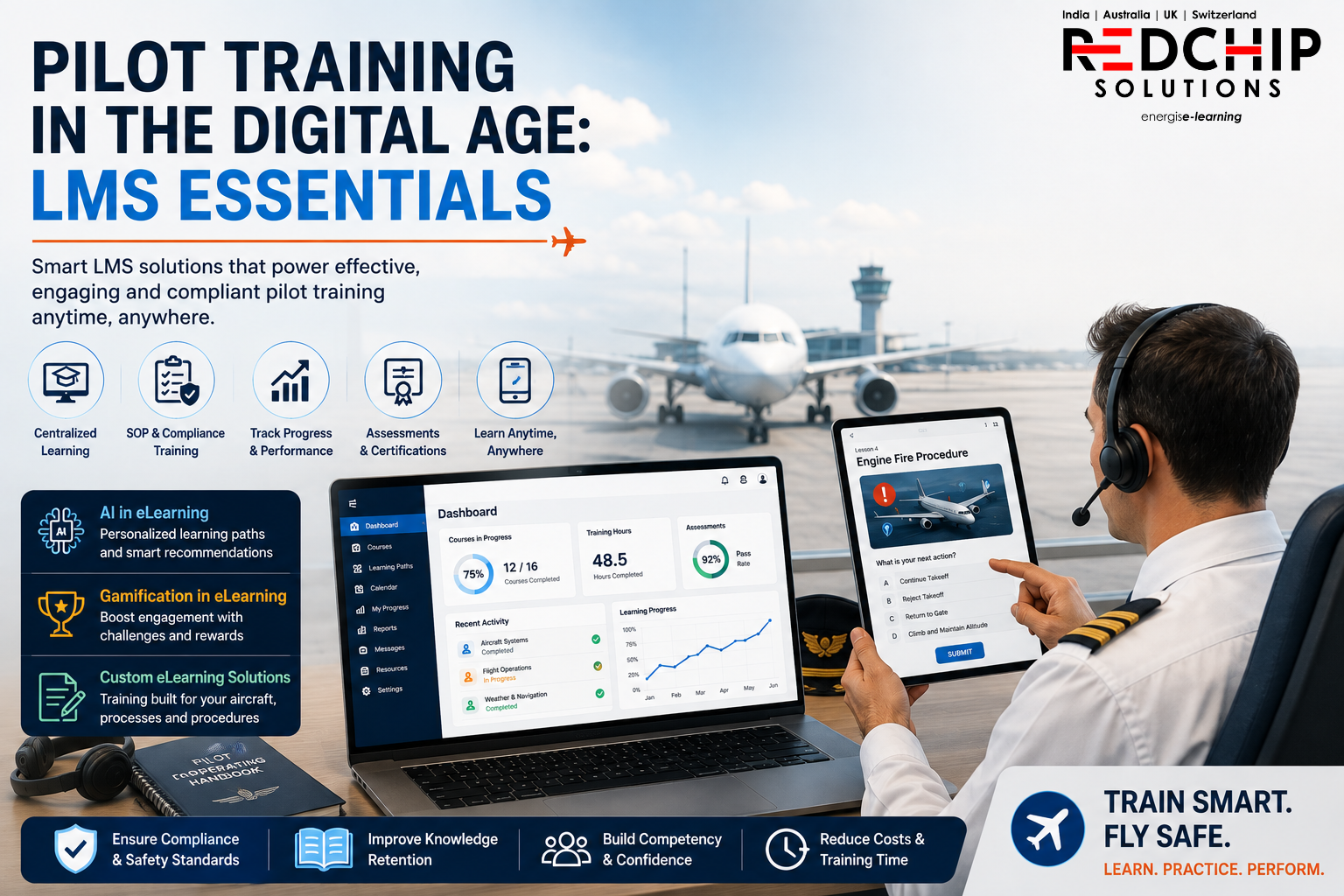
In AI-driven regulatory processes, frequent updates must reach employees without disrupting work. Microlearning modules make this possible through short and focused lessons.
Short lessons can cover:
- Policy changes
- New submission requirements
- Documentation best practices
- Audit preparation tips
Because learning is short and focused, employees stay updated without disrupting daily work. Moreover, AI can assign microlearning automatically when changes occur.
Gamification in eLearning for Better Compliance Adoption
For many teams, AI regulatory affairs initiatives succeed only when employees actively engage with compliance learning. Gamification helps improve participation and knowledge retention.
Organizations can introduce:
- Compliance quizzes and challenges
- Progress tracking and badges
- Scenario-based decision learning
When employees actively participate, they understand documentation standards better. Over time, this reduces compliance risks and improves audit performance.
The eLearning Design Process for AI-Driven Regulatory Learning
An effective approach to AI-based documentation management depends on a strong eLearning design process that aligns learning with regulatory risks and workflows.
Meanwhile, AI in eLearning tracks performance, identifies knowledge gaps, and recommends additional training. This ensures that learning remains continuous and aligned with regulatory expectations.
International standards from the International Organization for Standardization also highlight the need for controlled documentation and ongoing competence.
Managing Regulatory Training with a Scalable eLearning Platform
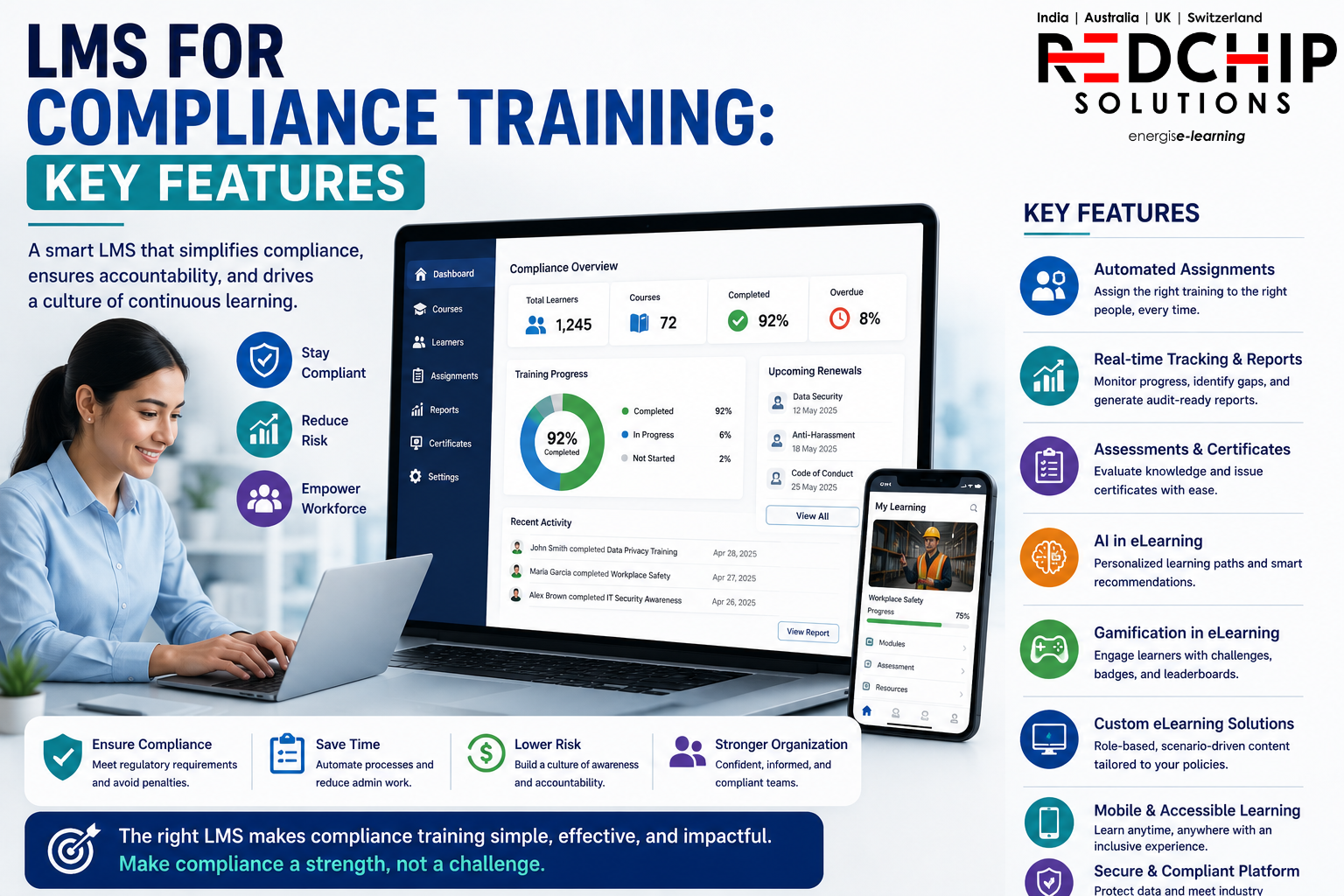
To scale AI regulatory affairs across locations, organizations need a centralized eLearning platform that manages training, tracking, and audit readiness.
- Automated training assignments based on role
- Version-controlled learning content
- Real-time compliance tracking and reporting
- Audit-ready training records
Because updates can be deployed instantly, organizations ensure that everyone works with the latest information.
According to insights from McKinsey & Company, organizations using AI-driven operations and knowledge management improve compliance efficiency and reduce operational risk.
Conclusion: Scaling Compliance with AI in Regulatory Affairs
As regulations grow more complex, AI regulatory affairs helps organizations manage documentation, training, and compliance more efficiently.
By combining custom eLearning solutions, microlearning modules, and gamification in eLearning, companies can turn regulatory updates into practical learning experiences. When supported by strong eLearning content development and a reliable eLearning platform, compliance becomes consistent, scalable, and audit-ready.
If you want to reduce documentation risk, improve regulatory readiness, and manage compliance at scale, now is the time to modernize your approach.
Request a demo today to see how AI-powered regulatory learning can support your organization.