

Pharmaceutical companies handle growing volumes of safety data every day. However, manual processing and strict timelines often slow pharmacovigilance operations. Today, AI in pharmacovigilance helps organizations automate case intake, improve data accuracy, and detect risks earlier.
At the same time, adopting AI-driven pharmacovigilance systems requires teams to learn new tools and workflows. Therefore, organizations must support technology adoption with structured learning. This is where custom eLearning solutions help employees build the skills needed to work effectively in an AI-enabled environment.
If you would like to understand how this approach can work for your organization, you can request a demo.
What this blog covers
- How AI supports modern safety operations
- Training challenges in AI-enabled environments
- The role of custom eLearning solutions
- Microlearning and gamification strategies
- Best practices in design and delivery
- Selecting the right platform and partner
To see real-world implementations of AI-driven training programs, explore our portfolio.
How AI in Pharmacovigilance Improves Safety Workflows
Modern safety teams rely on automation to manage large datasets. AI in pharmacovigilance can extract information from medical narratives, classify adverse events, and prioritize high-risk cases. Moreover, intelligent systems analyze patterns across reports to identify potential safety signals.
As a result, organizations can respond faster and improve patient protection. Meanwhile, automation reduces manual workload and improves consistency. Therefore, pharmacovigilance professionals can focus more on clinical review and risk evaluation.
To ensure alignment with international safety requirements and best practices, organizations implementing AI in pharmacovigilance should follow the latest guidance from the World Health Organization
The U.S. Food and Drug Administration provides comprehensive frameworks for adverse event reporting, risk monitoring, and regulatory compliance.
Training Teams for AI-Driven Pharmacovigilance
While technology improves efficiency, workforce readiness remains a key challenge. Teams working with AI in pharmacovigilance must understand new interfaces, updated SOPs, and changing compliance expectations.
Custom eLearning solutions help organizations:
- Standardize processes across teams
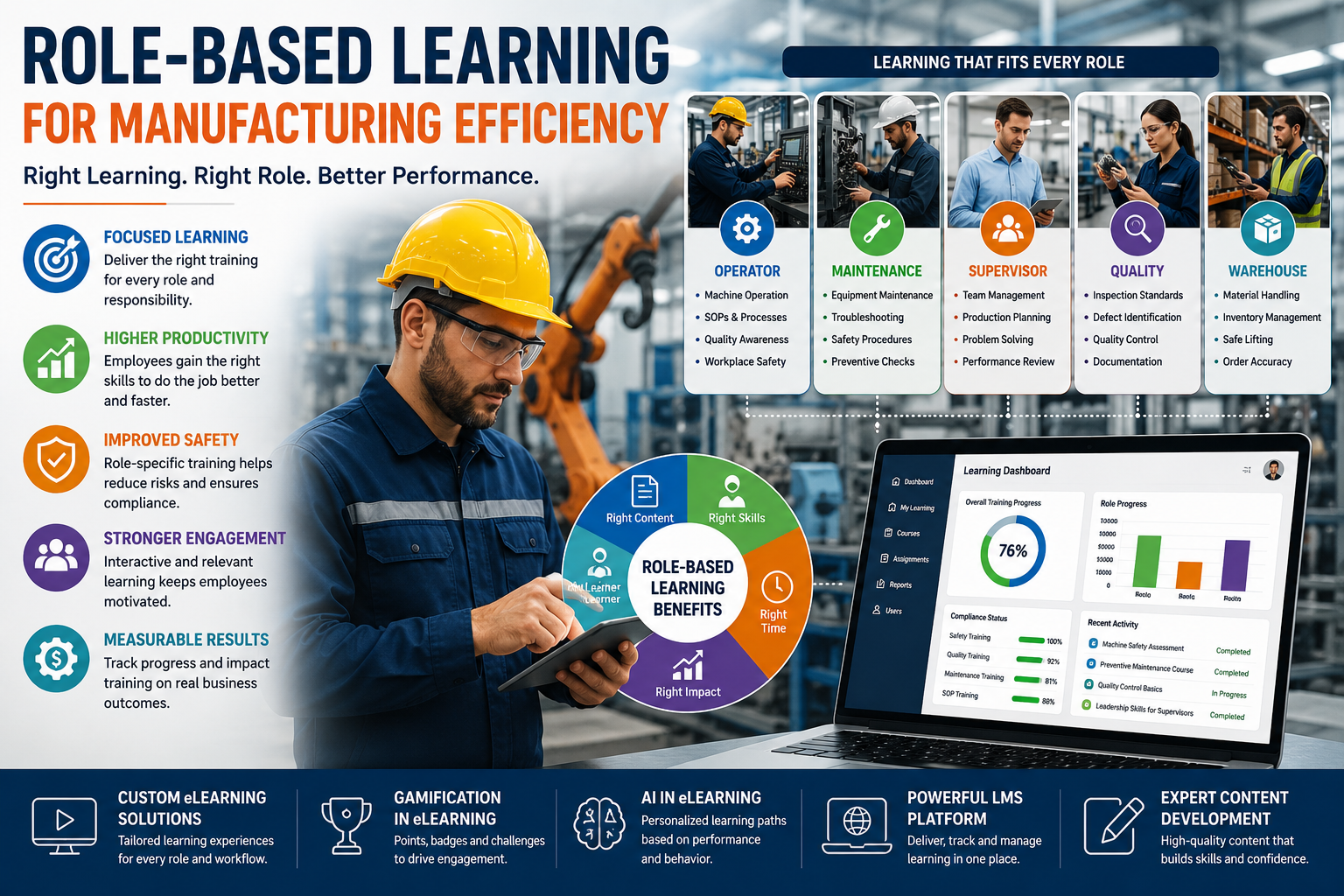
- Provide role-based learning
- Reduce onboarding time
- Improve accuracy in daily tasks
In addition, scenario-based learning allows employees to practice real situations. As a result, teams become more confident in using AI-enabled pharmacovigilance tools.
Microlearning for Continuous Skill Development
Professionals working in AI-enabled safety environments often have limited time for training. Therefore, microlearning modules support continuous skill development for teams involved in AI in pharmacovigilance.
For example:
- Short lessons on automated case processing
- Quick refreshers on reporting timelines
- Mini simulations for signal evaluation
In addition, mobile access allows learners to revisit content anytime. As a result, knowledge retention improves without affecting productivity.
Boosting Engagement with Gamification
As organizations expand AI in pharmacovigilance, employee engagement becomes even more important. However, traditional compliance training often feels repetitive. Gamification in eLearning introduces interactive elements such as challenges, badges, and progress tracking.
Consequently, employees stay motivated and complete training on time. Moreover, higher engagement improves knowledge application in real safety workflows.
Designing Learning for Compliance and Accuracy
A structured eLearning design process ensures that training supports both operational efficiency and regulatory readiness. When implementing AI-driven pharmacovigilance systems, training must reflect real workflows and compliance requirements.
The process typically includes:
- Role-based training analysis
- Content mapping to workflows and SOPs
- Scenario-based module development
- Expert validation and regular updates
For detailed guidelines on post-authorisation safety and compliance, refer to the pharmacovigilance resources from the European Medicines Agency
Personalized Learning with AI in eLearning
As organizations adopt AI in pharmacovigilance, learning strategies must also evolve. AI in eLearning helps deliver personalized training based on job roles, performance data, and skill gaps.
As a result, employees receive targeted learning paths that support their responsibilities in AI-enabled safety operations. Meanwhile, managers gain better visibility into training progress and compliance status.
Choosing the Right Platform and Content Partner
Effective eLearning content development ensures that complex pharmacovigilance topics remain clear and practical. Organizations implementing AI-driven pharmacovigilance should work with experienced eLearning content providers who understand regulated environments.
At the same time, the right eLearning platform should support mobile access, microlearning delivery, progress tracking, and easy updates. Together, the right content and technology create a scalable learning ecosystem.
To see how these formats are implemented in real projects, visit our portfolio
Conclusion: Preparing Teams for the Future of AI in Pharmacovigilance
AI is transforming how pharmaceutical companies manage safety data, detect risks, and meet regulatory expectations. However, the success of AI in pharmacovigilance depends on how well teams adapt to new tools and processes.
With the right mix of custom eLearning solutions, microlearning, gamification, and AI-powered learning, organizations can build confident and capable safety teams.
planning to strengthen your training strategy for AI-enabled operations, request a demo to explore the next steps.