
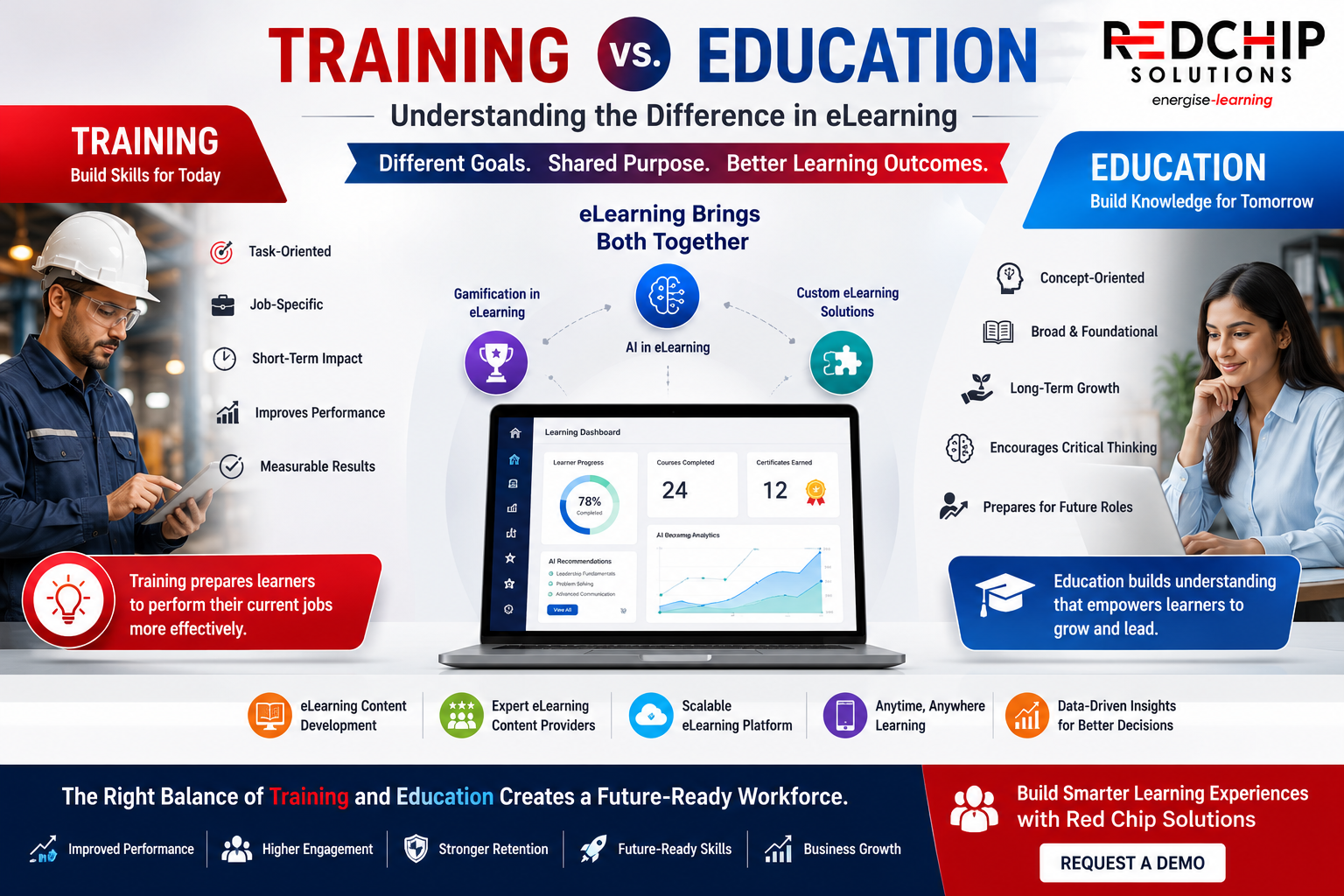
Training vs. Education is a topic many organizations overlook when building workplace learning programs. While both are important, they serve different purposes and deliver different outcomes. Training focuses on helping employees perform specific tasks, whereas education builds broader knowledge and critical thinking skills. Therefore, understanding the difference is essential for creating effective learning strategies.
Today, organizations are investing in modern learning technologies such as AI in eLearning, custom eLearning solutions, and advanced eLearning platforms. However, without knowing whether the goal is training or education, even the best technology may fail to deliver results. As a result, businesses often struggle to close skill gaps, improve performance, or prepare employees for future challenges.
At Red Chip Solutions, we help organizations design learning programs that balance both training and education while delivering measurable business outcomes through modern digital learning solutions.
Want to build learning programs that improve both performance and long-term growth? Request a Demo
What You’ll Learn
- The difference between training and education.
- Why both are important in modern eLearning.
- How AI supports learning outcomes.
- The role of custom eLearning solutions.
- Best practices for building effective learning programs.
- Explore the Red Chip Solutions Portfolio to see how we have helped organizations create impactful digital learning experiences.
Training vs. Education: What Is the Difference?
Training helps employees become productive faster. At the same time, education encourages innovation, problem-solving, and adaptability. As a result, organizations that invest in both areas often build stronger and more resilient teams.
For example:
Training in eLearning
- Job-specific learning
- Compliance programs
- Software training
- Process and procedure training
Education in eLearning
- Leadership development
- Business knowledge
- Industry awareness
- Professional growth
As a result, training helps employees perform today, while education prepares them for tomorrow.
Why Training vs. Education Matters in Modern eLearning
Training vs. Education plays a critical role in workforce development. Although many organizations focus heavily on training, education is equally important for long-term success.
Training helps employees become productive faster. Meanwhile, education encourages innovation, problem-solving, and adaptability. Therefore, organizations that invest in both areas often build stronger and more resilient teams.
Moreover, modern businesses face constant changes in technology, regulations, and customer expectations. Consequently, employees need both practical skills and broader knowledge to succeed.
AI in eLearning Supports Training and Education
Training vs. Education strategies become more effective when organizations use AI in eLearning to personalize learning experiences.
Furthermore, AI-powered analytics help organizations understand learner behavior and identify areas that need improvement. As a result, employees receive relevant content that supports both immediate performance and future growth.
Because of these benefits, AI has become an important tool for organizations seeking to improve learning effectiveness.
Custom eLearning Solutions for Training and Education Programs
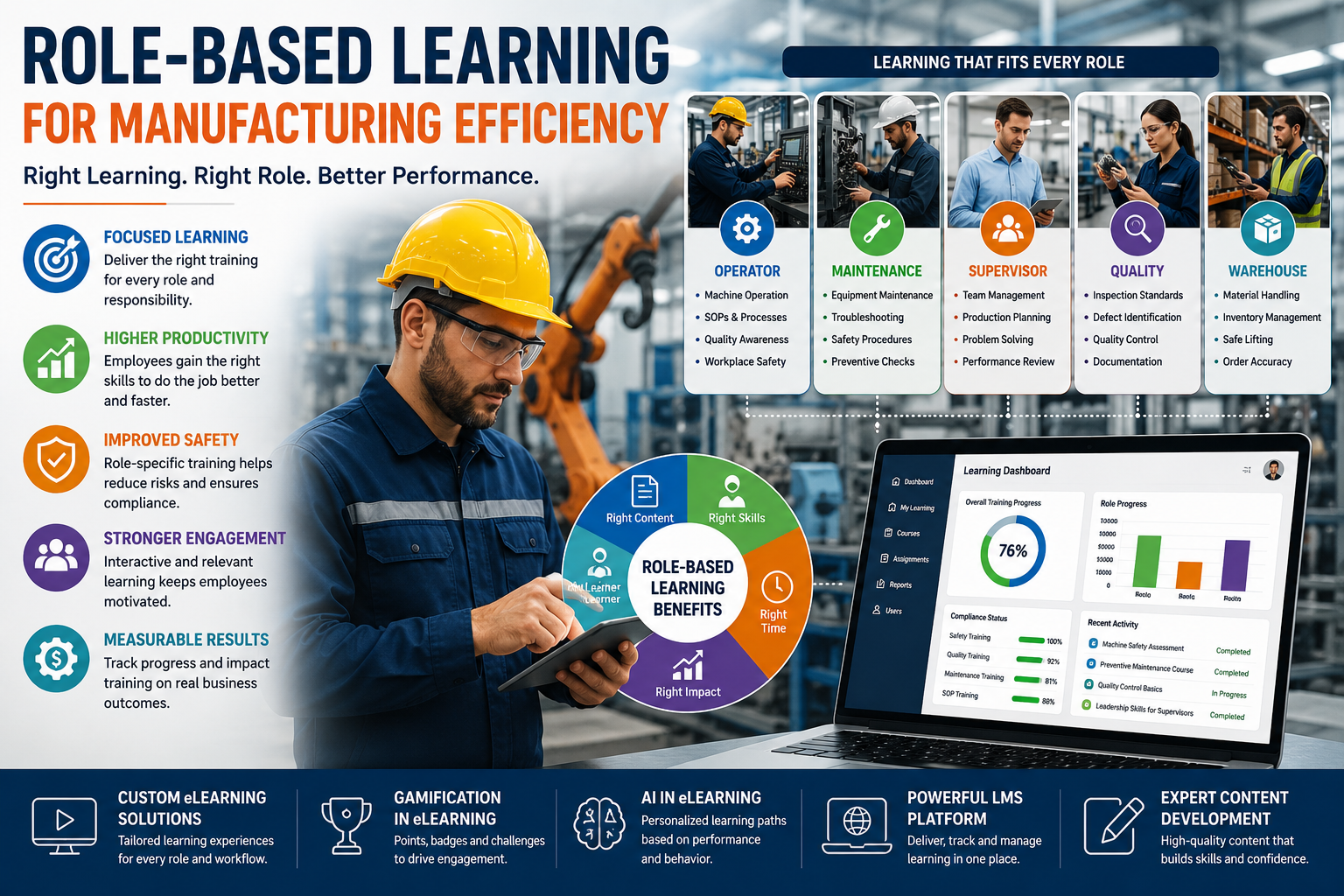
Custom eLearning solutions allow organizations to create learning experiences that match their specific business goals. Instead of relying on generic content, companies can develop programs that address real workplace challenges.
For training initiatives, customized courses focus on operational skills and performance improvement. Meanwhile, educational programs can support leadership development, industry knowledge, and strategic thinking.
As a result, learners receive content that feels relevant and meaningful, which improves engagement and knowledge retention.
Gamification in eLearning Increases Learner Engagement
In many organizations, Training vs. Education initiatives become more engaging when gamification elements are introduced. Gamification in eLearning can support both training and education by making learning more interactive and enjoyable. Through points, badges, leaderboards, and challenges, learners stay motivated throughout the learning process.
Moreover, gamification encourages active participation instead of passive content consumption. Therefore, organizations often see higher completion rates and improved learning outcomes.
When combined with effective instructional design, gamification helps create memorable learning experiences that support both short-term and long-term goals.
eLearning Content Development and Learning Success
Successful Training vs. Education programs depend on high-quality eLearning content development. Content should be clear, relevant, engaging, and aligned with learning objectives.
Experienced eLearning content providers understand how to balance instructional design, learner engagement, and business goals. Consequently, organizations can create learning programs that deliver measurable results.
At Red Chip Solutions, our team develops learning content that supports employee performance while encouraging continuous learning and growth.
For workplace learning research and best practices, visit the Association for Talent Development (ATD)
Choosing an eLearning Platform for Training and Education
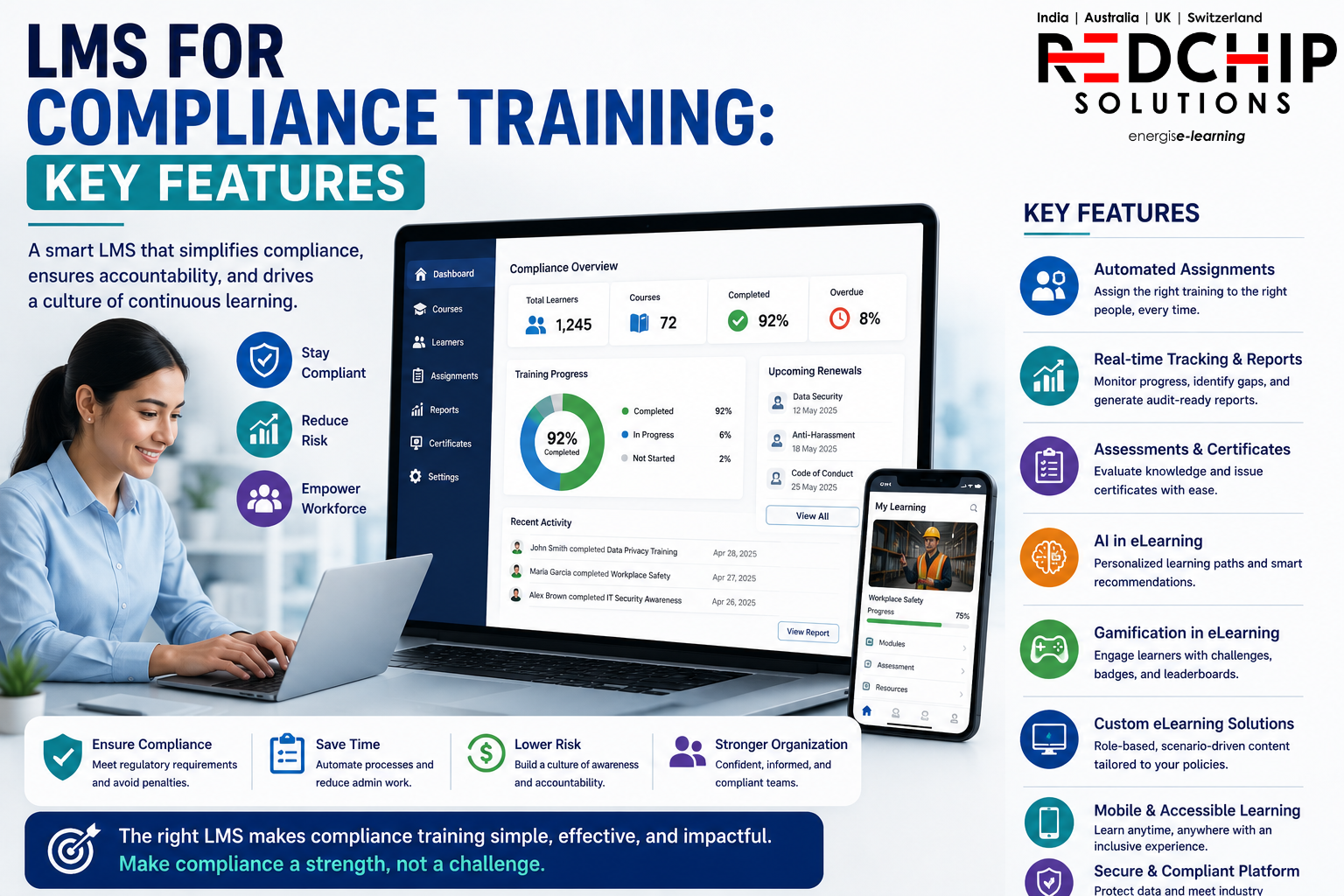
A modern eLearning platform should support both training and education initiatives. In addition, it should provide learner tracking, reporting, mobile accessibility, and personalized learning paths.
Furthermore, organizations should look for platforms that integrate with existing business systems and support future learning needs. As a result, businesses can build scalable learning ecosystems that continue to deliver value over time.
For additional insights into workplace learning and development, visit eLearning Industry
Why Red Chip Solutions Is a Leader in Modern eLearning
Creating successful learning programs requires more than technology alone. Instead, organizations need a partner that understands business objectives, learner behavior, and instructional design.
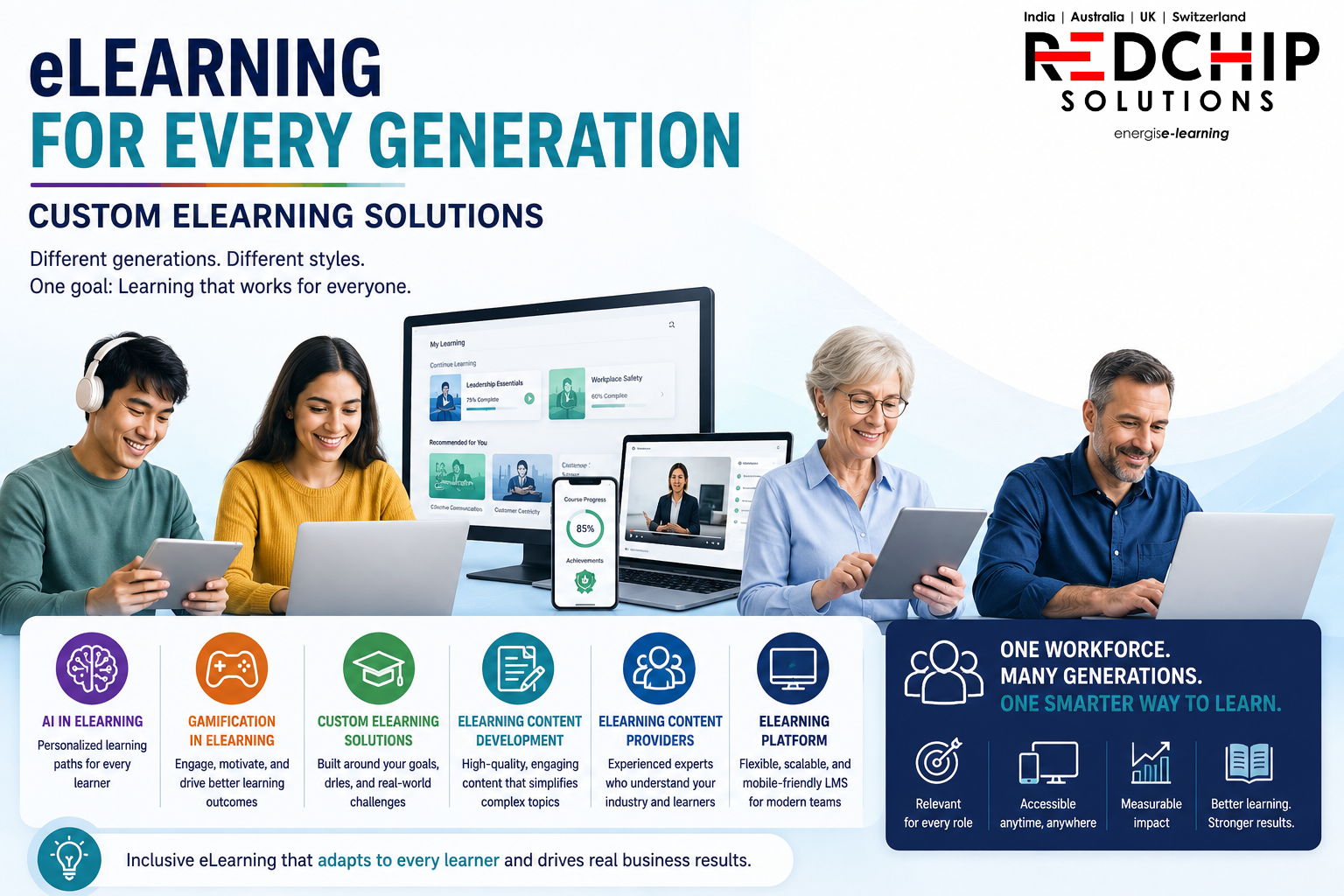
Therefore, Red Chip Solutions combines AI in eLearning, custom eLearning solutions, gamification in eLearning, eLearning content development, and advanced eLearning platforms to create learning experiences that drive real business results.
Our team works closely with organizations to design learning strategies that improve performance, strengthen employee capabilities, and support long-term growth. As a result, businesses across industries trust Red Chip Solutions as a leading provider of modern digital learning solutions.
Conclusion: Training vs. Education in the Future of eLearning
Training vs. Education is not about choosing one over the other. Instead, successful organizations recognize that both are essential for workforce development. Training improves job performance, while education builds the knowledge and skills needed for future success.
Moreover, when businesses combine AI in eLearning, custom eLearning solutions, gamification in eLearning, and expert eLearning content development, they create learning experiences that support both immediate and long-term goals.
At Red Chip Solutions, we help organizations build balanced learning programs that improve performance, encourage continuous growth, and deliver measurable outcomes. Ultimately, our goal is to help businesses create future-ready workforces through innovative digital learning solutions.