

Manufacturing teams work in fast-moving environments where employees must learn while performing tasks. However, traditional training programs often pull workers away from production and deliver too much information at once. Today, AI manufacturing learning helps companies provide practical, real-time training directly on the shop floor.
At the same time, organizations need scalable training that supports safety, compliance, and skill development. Therefore, companies are adopting AI in eLearning combined with custom eLearning solutions to deliver learning exactly when workers need it. As a result, training becomes faster, more practical, and easier to track.
If you want to explore how AI-driven learning can work in your organization, you can request a demo
What you’ll discover in this article
- How AI manufacturing learning improves on-the-job training
- The role of microlearning modules for factory workers
- How gamification in eLearning boosts engagement
- The importance of the eLearning design process
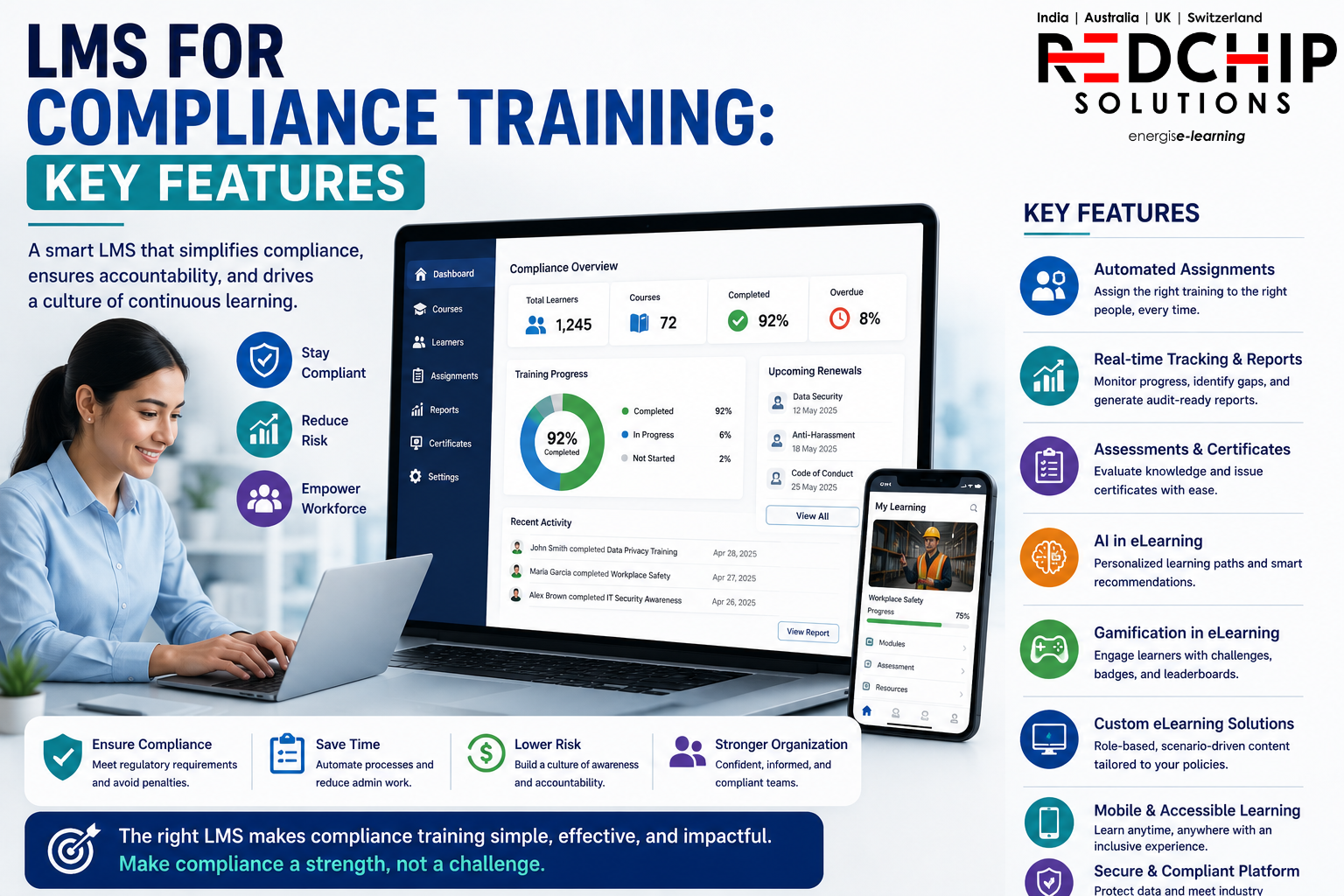
- Choosing the right eLearning platform and content providers
Meanwhile, if you want to see real training implementations, you can explore our portfolio
AI Manufacturing Learning Improves On-the-Job Training
On the factory floor, employees often need guidance while operating equipment or performing technical tasks. Therefore, AI manufacturing learning provides real-time support through smart learning systems.
For example, AI systems analyze worker performance and recommend training content based on skill gaps. In addition, employees can access quick guides, short videos, or troubleshooting lessons during production tasks.
Moreover, AI-based learning systems deliver contextual information when it is needed most. Consequently, workers can solve problems faster and avoid costly mistakes.
Furthermore, AI training platforms also provide performance analytics that help managers understand workforce capabilities. As a result, organizations gain better visibility into skill development and operational readiness.
For workplace safety and industrial training practices, organizations often refer to the International Labour Organization
Microlearning Modules Strengthen AI Manufacturing Learning
Training in manufacturing must be short, practical, and easy to access. Therefore, microlearning modules play an important role in AI manufacturing learning.
Microlearning delivers short lessons that focus on a single task or concept. For instance, a technician can review a quick machine setup guide or safety checklist before starting work. Additionally, microlearning works well in shift-based environments. Workers can complete short lessons during breaks or downtime without interrupting production.
To understand how microlearning solutions are applied in real projects, you can explore our portfolio
Gamification in eLearning Improves Workforce Engagement
Many manufacturing training programs struggle with low engagement. However, gamification in eLearning makes training more interactive and motivating.
For example, workers can earn points or badges for completing safety training or maintenance modules. In addition, team leaderboards encourage healthy competition between departments.
Consequently, training participation increases and employees become more involved in learning programs. Furthermore, interactive challenges allow workers to practice real-world scenarios safely.
As a result, organizations build a stronger learning culture while improving operational performance.
AI in eLearning Enables Personalized Learning Paths
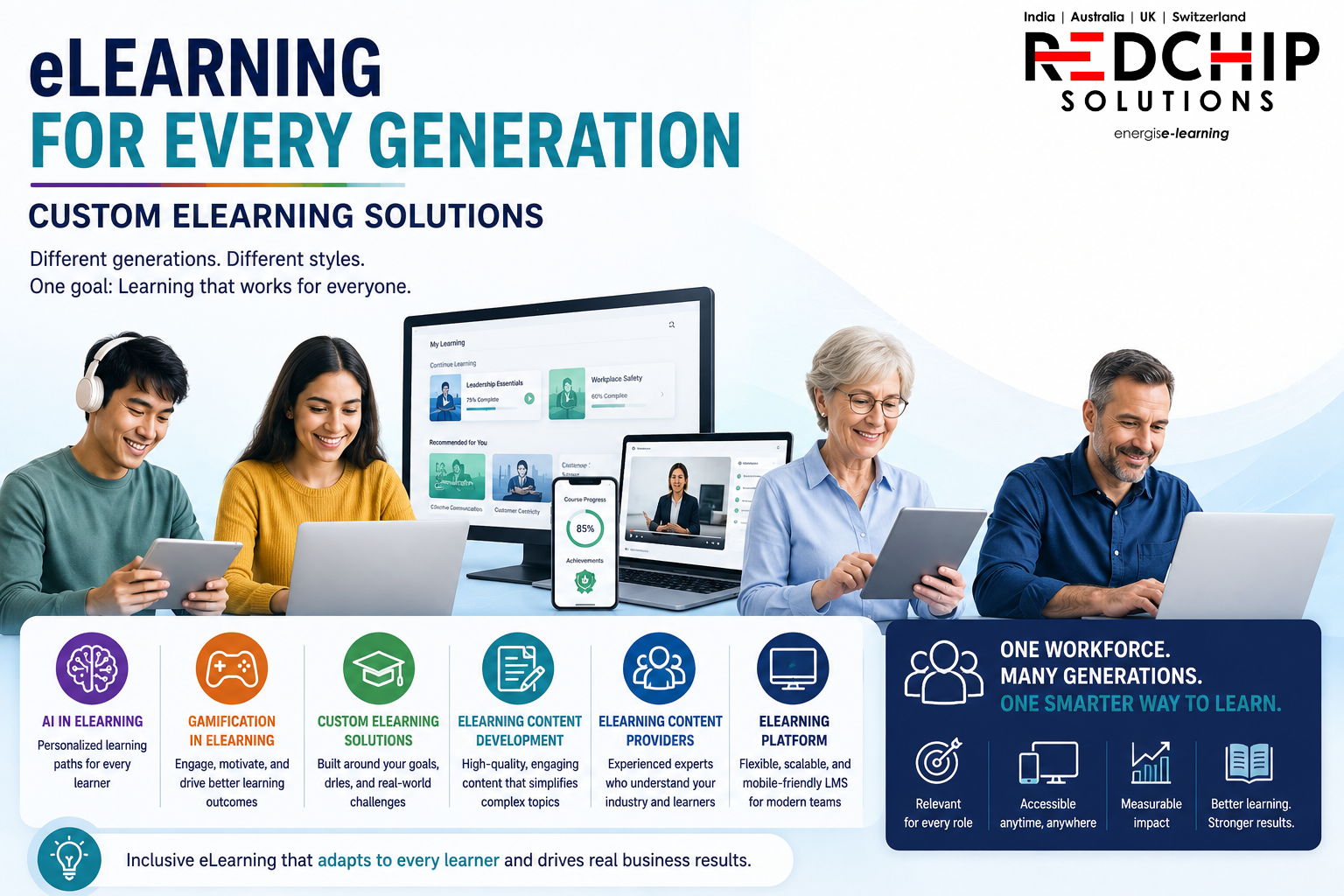
Not every worker has the same experience level. Therefore, AI in eLearning plays a key role in improving AI manufacturing learning.
AI systems analyze employee performance data and recommend targeted training. For example, a new operator may receive beginner modules, while experienced workers receive advanced troubleshooting training. Moreover, AI can provide real-time feedback and suggest improvements during training activities. Consequently, employees develop skills faster and training becomes more efficient.
This personalized approach is especially valuable in manufacturing, where skill gaps can affect productivity and safety.
eLearning Design Process Builds Effective Manufacturing Training
Successful training programs require a structured eLearning design process. First, organizations analyze operational challenges and training needs. Then, eLearning content development focuses on real job scenarios and practical demonstrations.
For instance, courses may include equipment simulations, troubleshooting exercises, or safety decision-making scenarios.
Additionally, subject matter experts review the content to ensure technical accuracy. As a result, workers receive relevant and practical knowledge that improves performance on the shop floor.
According to industry studies, more than 60% of modern learning content is now delivered through microlearning formats, highlighting the growing shift toward shorter and more practical training methods. (techclass.com)
Choosing the Right eLearning Platform and Content Providers
The success of AI manufacturing learning depends on both technology and expertise. Therefore, organizations should partner with experienced eLearning content providers who understand industrial training requirements.
At the same time, the eLearning platform should support mobile access, real-time analytics, certification tracking, and content updates. In addition, integration with HR and operational systems helps manage training more efficiently.
When companies combine the right platform with custom eLearning solutions, they can create scalable training programs that support workforce development and operational excellence.
Conclusion: The Future of On-the-Job Learning with AI Manufacturing Learning
Manufacturing companies need training solutions that match the pace of modern production. AI manufacturing learning allows organizations to deliver practical, personalized training directly on the job.
When combined with custom eLearning solutions, microlearning modules, gamification, and smart analytics, this approach helps employees learn faster and perform more effectively. More importantly, Ai driven training helps organizations build a skilled workforce ready for Industry 4.0 challenges.
If you want to modernize workforce development and improve shop-floor learning, now is the time to act.
Request a demo to see how our custom eLearning solutions can support your manufacturing training strategy