
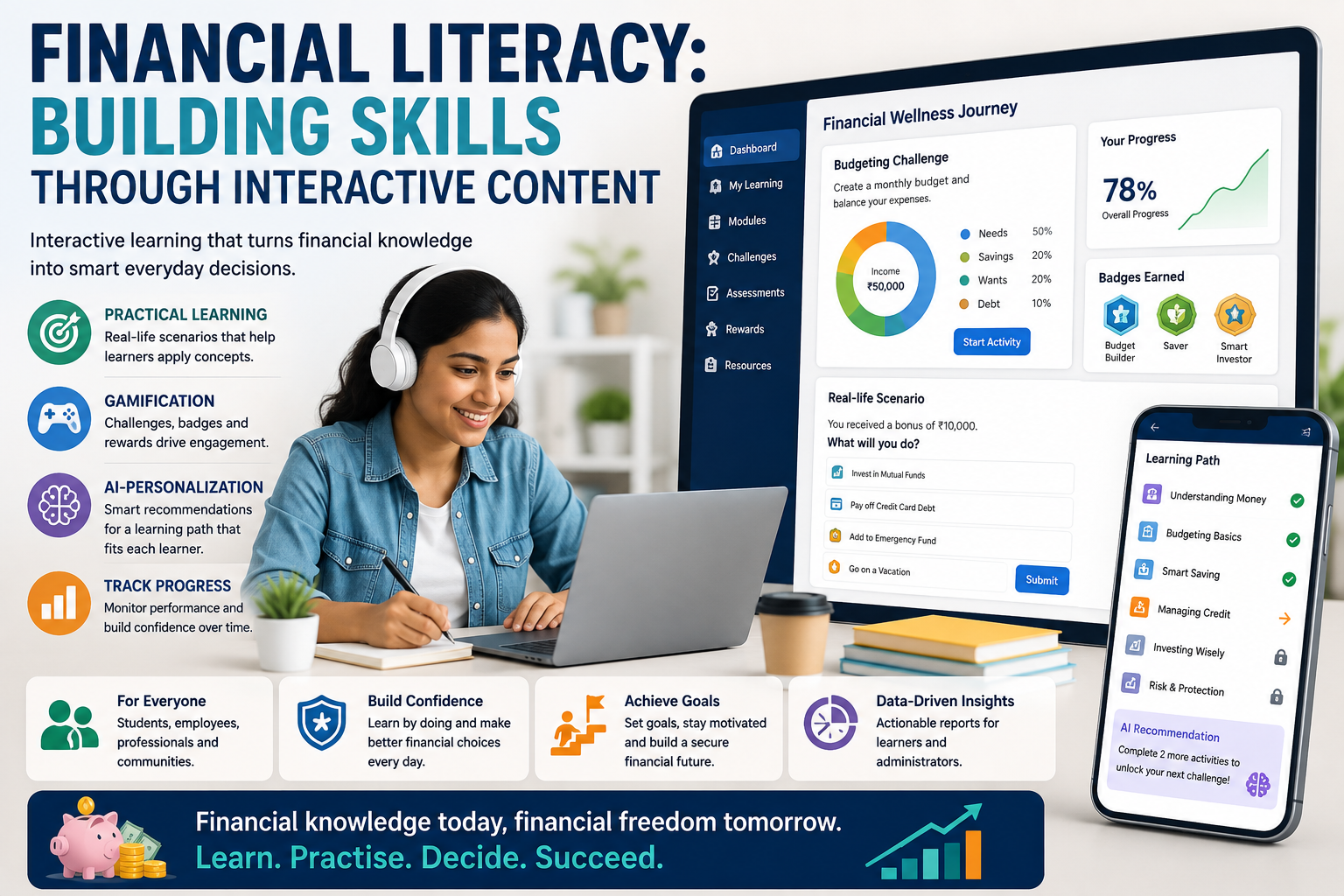
Financial literacy is no longer only about knowing what a budget, loan, interest rate, or investment means. Today, learners also need to make sound choices in real situations. Therefore, organizations and educational institutions need learning experiences that let people practise financial decisions, not simply read about them.
Interactive content can make that shift possible. Instead of presenting long pages of financial terms, a course can ask learners to build a budget, compare loan options, manage an unexpected expense, or decide how much to save. As a result, financial literacy becomes more practical, relatable, and easier to apply.
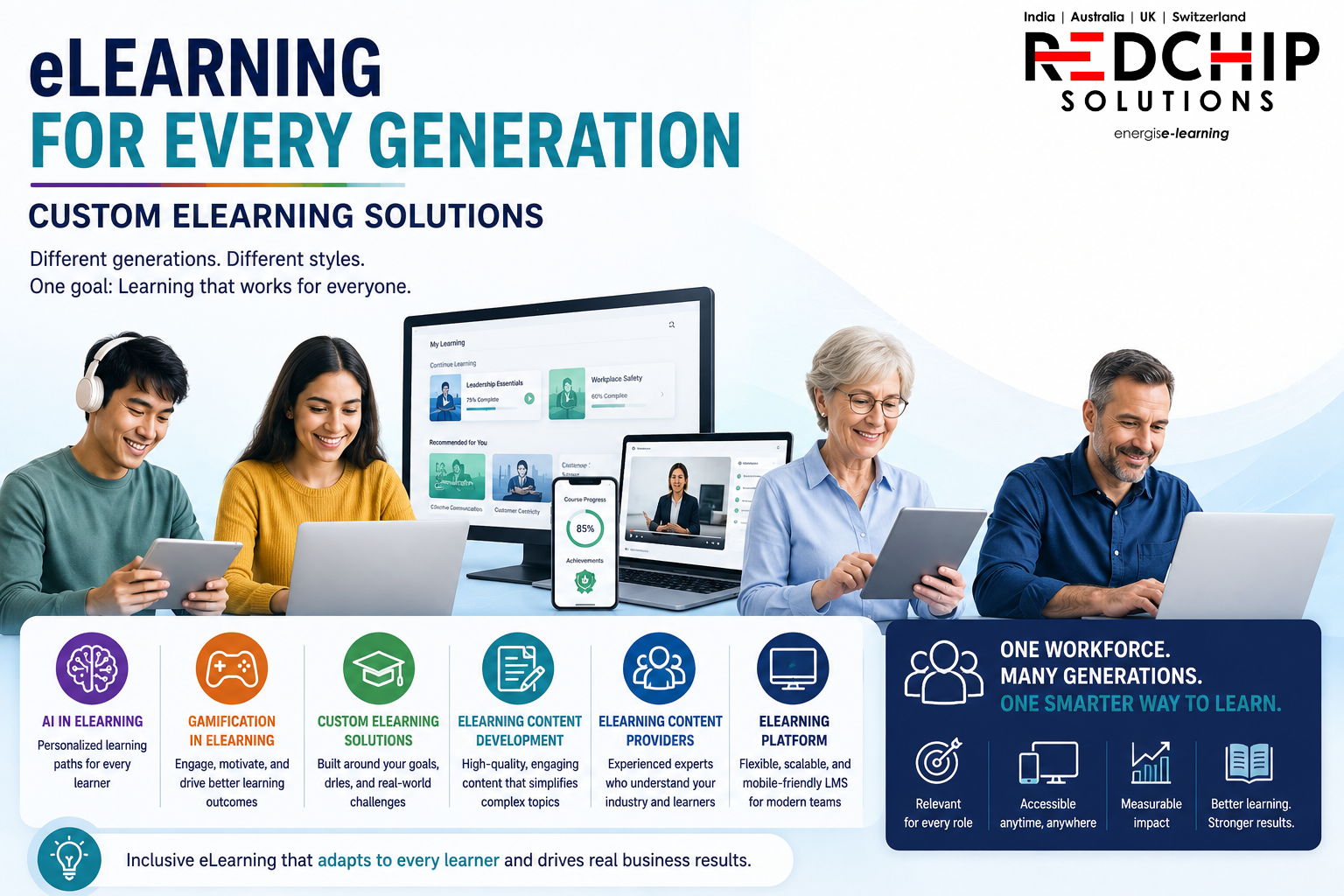
This is where custom eLearning solutions, gamification in eLearning, AI in eLearning, strong eLearning content development, experienced eLearning content providers, and a flexible eLearning platform can work together.
If you are planning an interactive financial learning program, Requesting for a Demo can help you discuss your learning goals with Red Chip Solutions.
What You Will Find in This Financial Literacy Guide
This guide focuses on how interactive digital learning can make financial education more useful.
You will discover:
- Why interactive learning works for financial literacy
- How real-life scenarios improve decision-making
- How gamification can make finance more engaging
- Where AI can support personalized learning
- How custom eLearning solutions can fit different audiences
- The role of eLearning content development
- How an eLearning platform can track progress
- What to look for in eLearning content providers
- How Red Chip Solutions can support interactive learning
Why Financial Literacy Needs More Than Traditional Content
Traditional financial education often explains concepts clearly. However, knowing a definition does not always mean that a learner can use it.
For example, a learner may understand what compound interest means. Yet, when faced with two savings options, they may still struggle to decide which option is better.
Therefore, financial literacy training should move from information to action.
A strong digital course can present a situation and ask the learner to make a choice.
For instance:
You have ₹50,000 available. You also have an outstanding loan, a short-term goal, and no emergency fund. What should you do first?
The learner makes a decision. Then, the course explains the possible outcome.
This approach creates a learning loop:
Understand → Decide → See the Result → Reflect → Try Again
As a result, learners can build both knowledge and confidence.
Consumer Financial Protection Bureau (CFPB) – Financial Literacy Activities Useful for examples of budgeting, spending, saving, investing, credit, and financial decision-making activities.
Interactive Financial Literacy Content Makes Learning Practical
Interactive financial literacy content works best when it connects lessons with situations people may actually face.
Instead of asking learners to remember a list of terms, use activities that require them to apply those terms.
For example, a course can include:
- Budget-building exercises
- Loan comparison activities
- Savings challenges
- Investment risk scenarios
- Spending decisions
- Tax and salary simulations
- Credit score activities
- Emergency fund challenges
- Fraud awareness scenarios
Furthermore, the difficulty can increase as learners progress.
A beginner may start with basic spending choices. Later, the same learner could manage a complete monthly budget with unexpected expenses.
This gradual approach helps reduce fear around financial topics.
Custom eLearning Solutions for Financial Literacy
Custom eLearning solutions allow financial education to be designed around a specific audience, goal, and level of knowledge.
A college student does not need the same learning experience as a first-time employee. Likewise, a banking employee may need a different type of financial learning from a school student.
Therefore, custom learning can adjust:
- Language
- Examples
- Difficulty
- Visual style
- Scenarios
- Assessments
- Learning paths
- Course length
For example, a course for young employees could focus on salary planning, taxes, credit cards, savings, and emergency funds.
On the other hand, a financial learning program for students could start with spending, saving, needs versus wants, and basic banking.
As a result, custom eLearning solutions can make financial education more relevant.
Gamification in eLearning Can Make Financial Literacy More Engaging
Gamification in eLearning can turn financial learning into an experience rather than a standard course.
Finance can sometimes feel difficult or dry. However, game-based activities can give learners a clear reason to continue.
For example, learners could receive a virtual salary and then manage their money for 30 simulated days.
Unexpected events could appear along the way.
A medical expense might occur.
A laptop might break.
A bonus might arrive.
A loan payment might become due.
The learner must respond to each event while trying to reach a financial goal.
Therefore, gamification in eLearning can help learners understand the impact of financial choices.
ort the learning goal. Simply adding points does not automatically create effective financial literacy training.
AI in eLearning Can Personalize Financial Learning
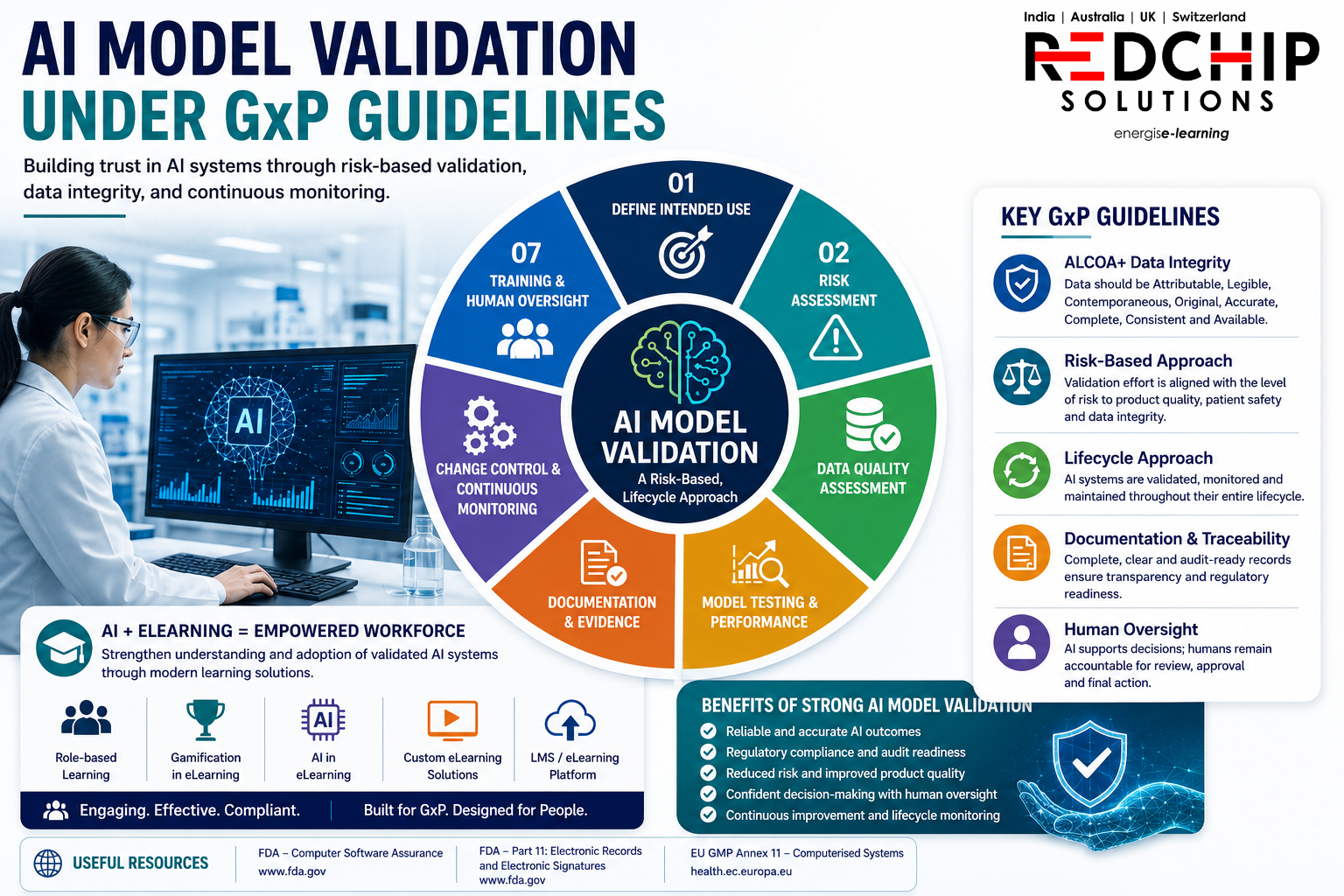
AI in eLearning can help make financial education more personalized.
Not every learner starts at the same level.
One person may understand budgeting but struggle with investing. Another may know how loans work but have limited knowledge of insurance.
Therefore, an AI-supported learning system can help identify learning gaps and recommend suitable content.
For example, AI in eLearning can analyze learner performance and recommend content based on individual strengths and learning gaps:
This creates a more focused learning path.
However, AI should be used carefully when financial information is involved. Content should be reviewed by qualified subject experts, and learners should clearly understand when they are completing educational simulations rather than receiving personal financial advice.
As a result, AI in eLearning can support personalization without replacing sound instructional design.
eLearning Content Development Should Focus on Decisions
Strong eLearning content development is central to effective financial learning.
The goal should not be to turn a textbook into an online course.
Instead, content developers should ask:
What should the learner be able to do after completing this activity?
Effective financial learning should match the activity to the learning goal—for example, learners should build a budget to learn budgeting, compare credit choices to understand credit, and identify risky situations to develop risk awareness.
Therefore, assessments should also reflect these goals.
Instead of asking:
“What is compound interest?”
An interactive assessment could ask:
“Which savings option produces the better result over five years, and why?”
The second question tests application.
Consequently, good eLearning content development can help turn financial knowledge into practical skills.
An eLearning Platform Should Track Financial Learning Progress
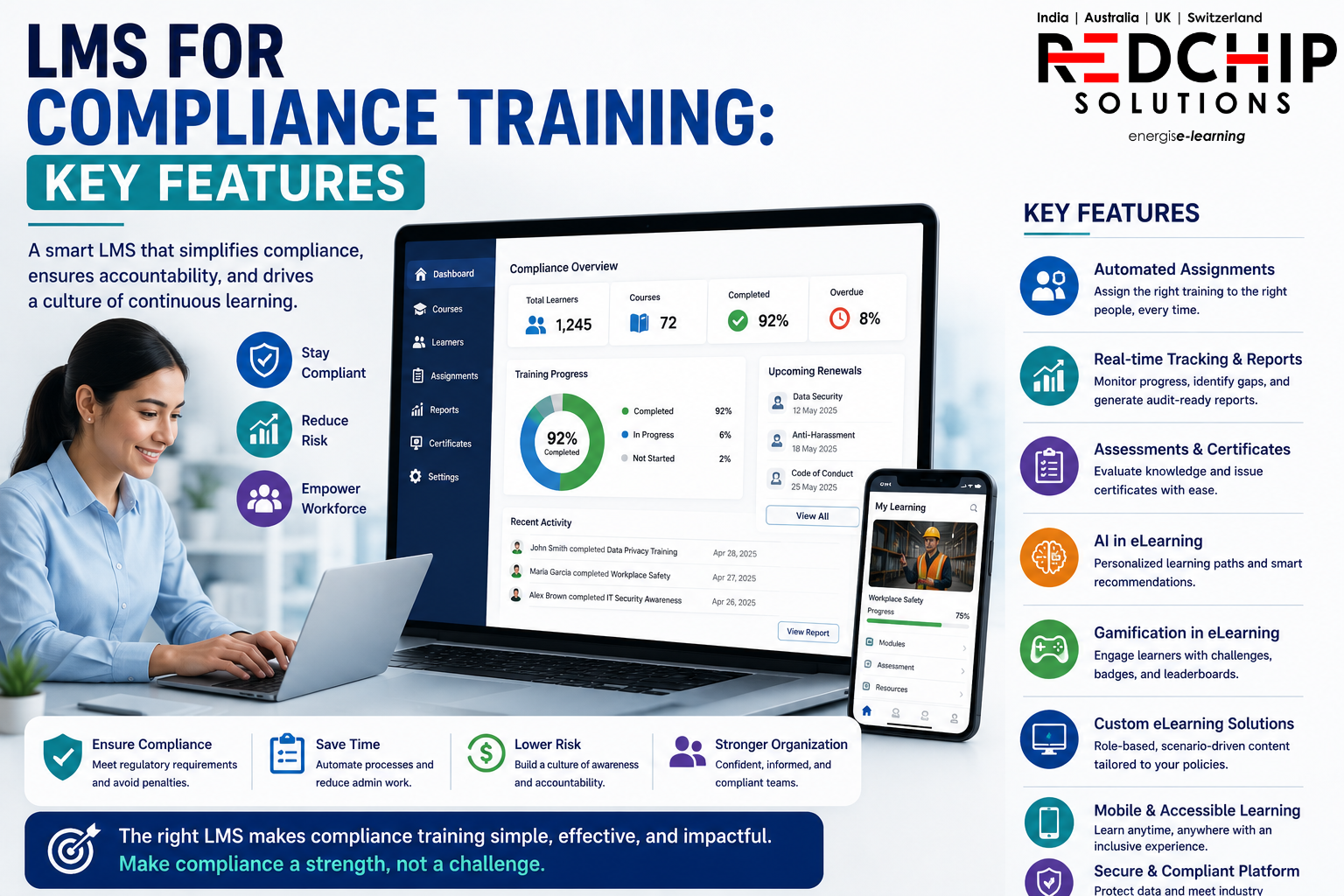
An eLearning platform provides the technology needed to deliver and manage interactive financial learning at scale.
For organizations, tracking is especially important.
Administrators may want to know:
- Who started the course?
- Who completed it?
- Which activities caused difficulty?
- Which topics have the lowest scores?
- How many attempts did learners need?
- Which learning paths are being used?
- How is learner performance changing?
Furthermore, an eLearning platform can support dashboards, assessments, certificates, learning paths, and reports.
When interactive activities are connected to these features, learning teams get more than completion data.
They can gain insight into where learners need support.
Therefore, technology should support the learning strategy rather than simply act as a content library.
Choosing eLearning Content Providers for Financial Literacy
The right eLearning content providers can help organizations move from basic financial information to engaging digital learning.
Before selecting a provider, ask whether they can create:
- Interactive financial scenarios
- Simulations
- Gamified learning
- AI-enabled learning
- Mobile-friendly courses
- Assessments
- Role-based learning
- Custom visuals
- Accessible learning
- LMS-ready content
Moreover, review real examples of their work.
A provider may say it creates interactive learning. However, a portfolio gives you a better idea of how the team actually handles interaction, design, storytelling, and learner experience.
For example, Red Chip Solutions showcases projects across areas such as interactive learning, gamification, LMS solutions, and custom eLearning. Its portfolio also includes a financial institution case study involving video-based eLearning for compliance and ethics training.
How to Design a Strong Financial Literacy Learning Journey
A successful financial literacy program should follow a clear learning journey.
Start With the Learner
First, understand who the learner is.
Are they students, employees, customers, banking staff, or new professionals?
Next, identify their current knowledge.
Then, define the financial decisions they need to make.
Add Practical Activities
After the learning goals are clear, create activities that reflect real decisions.
For example, a learner could:
- Review income.
- Identify fixed expenses.
- Set a savings goal.
- Manage unexpected costs.
- Adjust spending.
- Review the final result.
This approach makes the course active.
Add Feedback
Feedback should explain why a choice worked or failed.
As a result, learners can learn from mistakes without facing real-world financial loss.
Measure Learning
Finally, use assessments and platform data to understand progress.
This creates a complete cycle:
Learn → Practise → Decide → Receive Feedback → Improve
Red Chip Solutions for Interactive Financial Learning
Red Chip Solutions brings together custom eLearning solutions, eLearning content development, gamification, AI-enabled learning, and LMS technology to create practical digital learning experiences.
Its approach is built around the idea that learning should connect with real work and real decisions.
For financial literacy, this can mean scenario-based courses, interactive simulations, gamified challenges, assessments, and personalized learning paths.
Red Chip Solutions has been working in the eLearning space since 2007 and positions itself as an eLearning technical partner and service provider for training teams.
Its existing work also shows experience with interactive and game-based learning. For example, one pharmaceutical learning project used a game-based structure with interactive exploration, rewards, animations, and assessments.
Therefore, organizations looking to build practical financial learning can combine instructional design with the right technology and content strategy.
Explore Red Chip Solutions Portfolio to see examples of interactive learning and digital training projects.
Conclusion: Build Financial Literacy Through Better Digital Learning
Financial literacy becomes more powerful when learners can practise financial decisions in a safe environment.
Instead of relying only on text and presentations, organizations can use interactive scenarios, simulations, challenges, and assessments. Furthermore, gamification in eLearning can make practice more engaging, while AI in eLearning can support personalized learning paths.
At the same time, custom eLearning solutions can adapt the experience to different learner groups.
Strong eLearning content development then turns financial concepts into useful activities. Meanwhile, the right eLearning content providers can help bring the instructional and visual design together.
Finally, a capable eLearning platform can deliver the content, track progress, and provide useful learning data.
For organizations that want to build financial learning that goes beyond basic information, Red Chip Solutions can combine custom eLearning solutions, AI in eLearning, gamification in eLearning, eLearning content development, and LMS technology into a practical learning experience.
Ready to make financial learning more interactive? Requesting for a Demo to discuss your learning goals with Red Chip Solutions.