
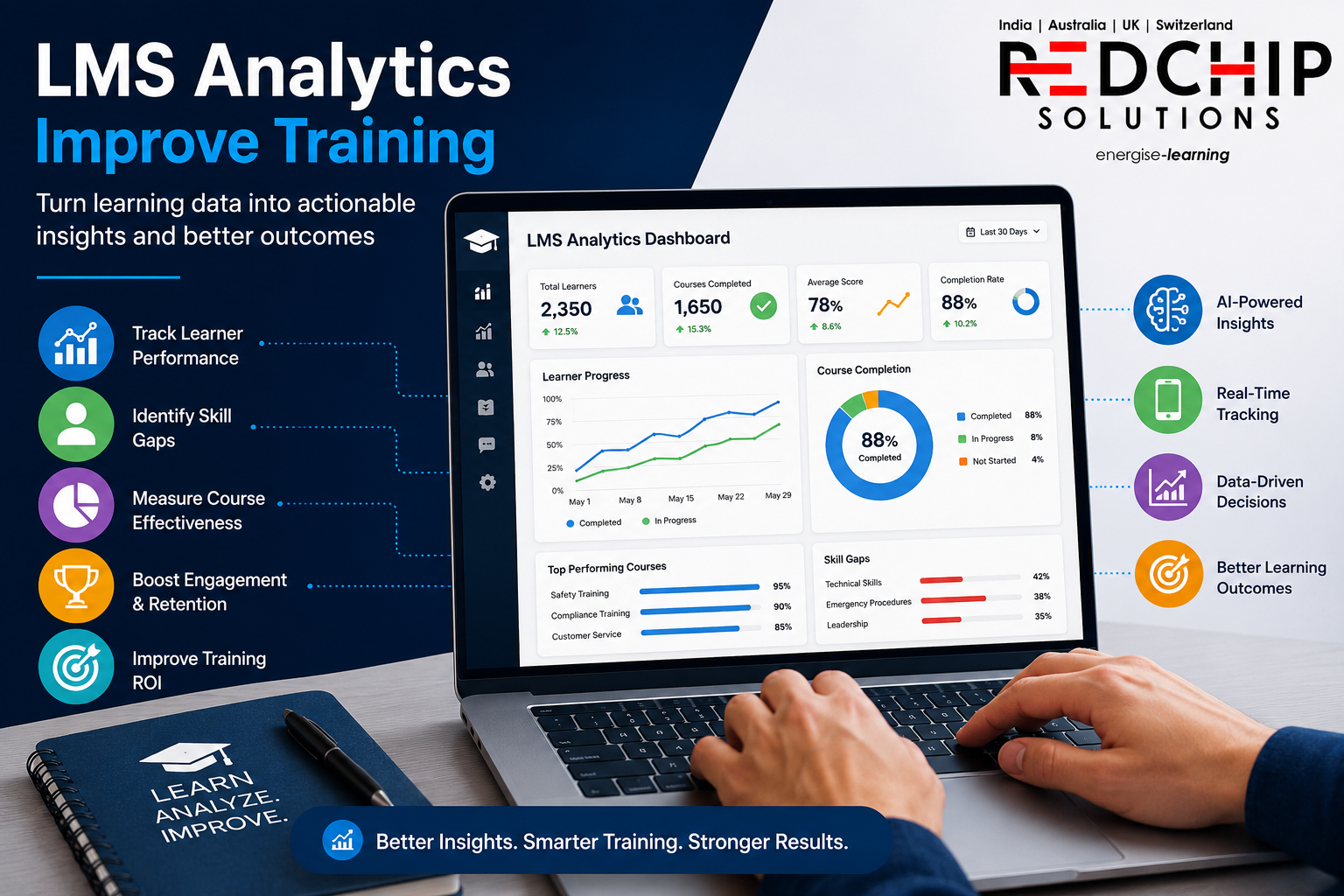
LMS analytics help organizations understand whether their training programs are delivering real business results. Many companies invest in learning technologies, yet employees still struggle to apply new skills on the job. Moreover, without clear insights into learner performance, organizations often fail to identify training gaps. As a result, learning becomes difficult to measure. By combining LMS analytics with AI in eLearning and custom eLearning solutions, businesses can make smarter decisions and continuously improve training outcomes.
The solution is not simply creating more courses. Instead, organizations need LMS analytics to measure learner progress, engagement, and performance. When combined with AI in eLearning and custom eLearning solutions, analytics provide valuable insights that help improve every stage of the learning journey.
Ready to transform your training with data-driven insights? Request a demo to see how our custom eLearning solutions can help your organization.
What You’ll Learn
- Why LMS analytics matter for modern training
- Key LMS analytics every organization should track
- How AI in eLearning improves learner insights
- Role of microlearning modules and gamification
- Choosing the right eLearning platform
- Explore our portfolio to see how we have delivered successful learning solutions across industries.
Why LMS Analytics Improve Training Decisions
Many organizations collect learning data but never use it effectively. However, LMS analytics help training managers understand learner behavior, completion rates, assessment scores, and engagement levels.
Common insights include:
- Course completion rates
- Assessment performance
- Learning time
- Skill gap identification
- User engagement reports
Because of this, organizations can improve learning content instead of making assumptions.
AI in eLearning Makes LMS Analytics Smarter
AI in eLearning enhances analytics by analyzing learner behavior automatically. For example, AI can recommend personalized learning paths based on performance and identify learners who need additional support.
Key benefits include:
- Personalized recommendations
- Predictive learning insights
- Faster skill-gap detection
- Automated reporting
As a result, organizations make faster and more informed training decisions.
Custom eLearning Solutions Improve Learning Outcomes
Generic training often produces average results. Therefore, organizations increasingly invest in custom eLearning solutions that match business goals and learner needs.
With customized learning:
- Content reflects real work situations
- Courses become role-specific
- Learning objectives become measurable
Consequently, analytics become more meaningful because they measure relevant business outcomes.
Microlearning Modules Increase Learner Engagement
Microlearning modules deliver short, focused lessons that employees can complete quickly. Moreover, they generate frequent learning data that improves LMS analytics.
For example, employees can complete a five-minute lesson during work without interrupting productivity.
Because of this, organizations gain better visibility into learner progress while improving knowledge retention.
Gamification in eLearning Encourages Better Performance
Traditional training often suffers from low participation. However, gamification in eLearning motivates learners through rewards, badges, leaderboards, and interactive challenges.
Benefits include:
- Higher completion rates
- Better learner engagement
- Improved knowledge retention
- Increased motivation
As a result, LMS analytics show stronger learner participation and improved training performance.
eLearning Design Process Supports Better LMS Analytics
A structured eLearning design process ensures every course has measurable learning objectives. First, organizations identify learner needs. Next, they create engaging content through eLearning content development. Finally, analytics are used to improve future courses.
Experienced eLearning content providers continuously refine training using learner data. Therefore, every learning program becomes more effective over time.
Choosing the Right eLearning Platform
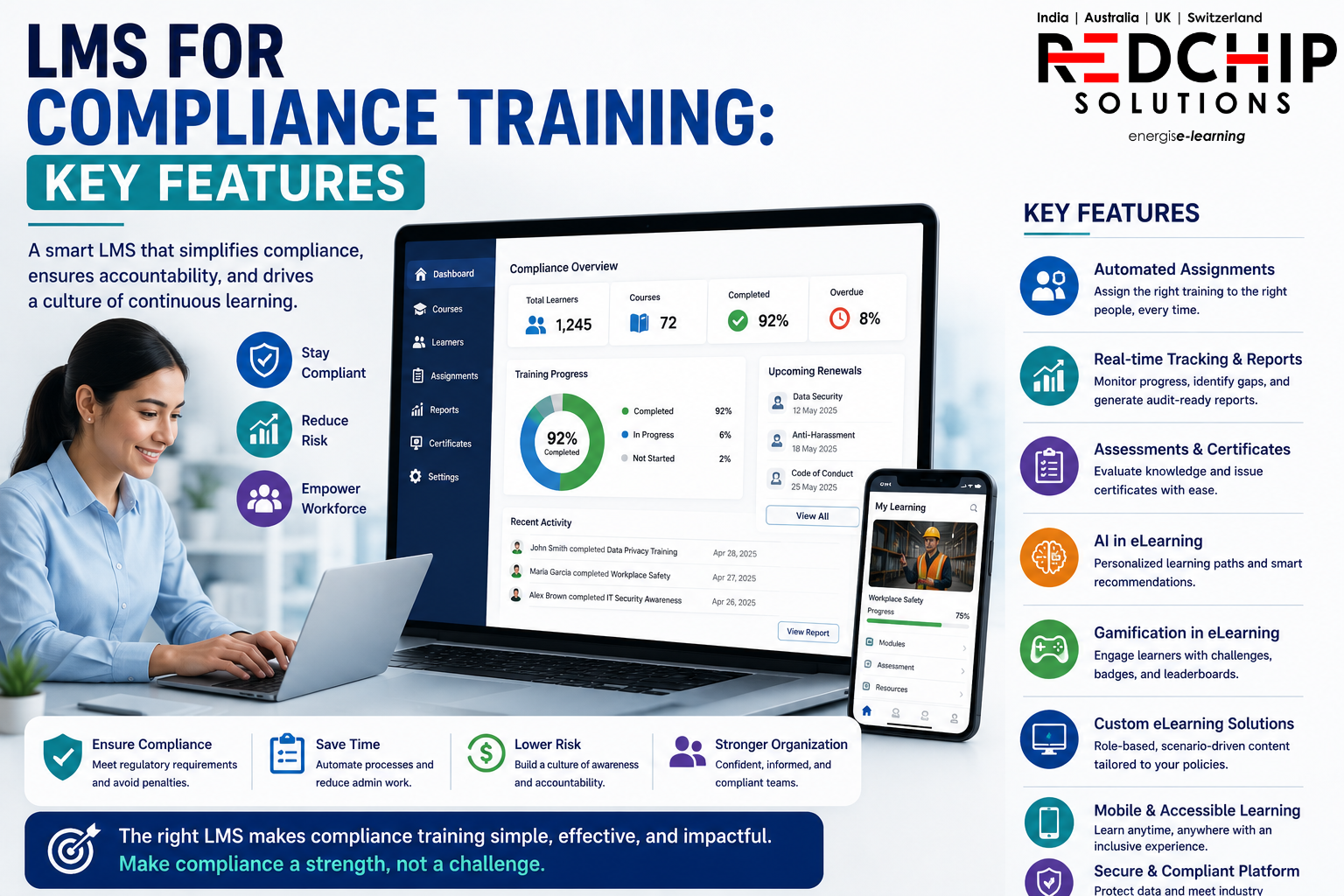
The right eLearning platform should provide detailed dashboards, learner reports, assessment tracking, and AI-powered insights.
A modern platform should support:
- Mobile learning
- Real-time reporting
- Learning analytics
- HR integration
- AI-driven recommendations
Because of this, organizations gain complete visibility into training performance. For best practices in workplace learning and analytics, visit the Association for Talent Development (ATD)
Common Mistakes When Using LMS Analytics
Many organizations fail to maximize LMS analytics because they:
- Track too many metrics
- Ignore learner feedback
- Focus only on completion rates
- Never update training content
- Skip performance analysis
As a result, valuable learning insights are lost.
Conclusion: Improve Training with LMS Analytics
LMS analytics help organizations transform learning data into meaningful business insights. Moreover, when combined with AI in eLearning, custom eLearning solutions, microlearning modules, and gamification in eLearning, organizations can build smarter and more effective training programs. As a result, learning becomes measurable, personalized, and aligned with business goals. If you want to improve learner engagement, measure training effectiveness, and maximize ROI, now is the perfect time to act.
Request a demo today to discover how our custom eLearning solutions and intelligent eLearning platform can transform your training strategy.