
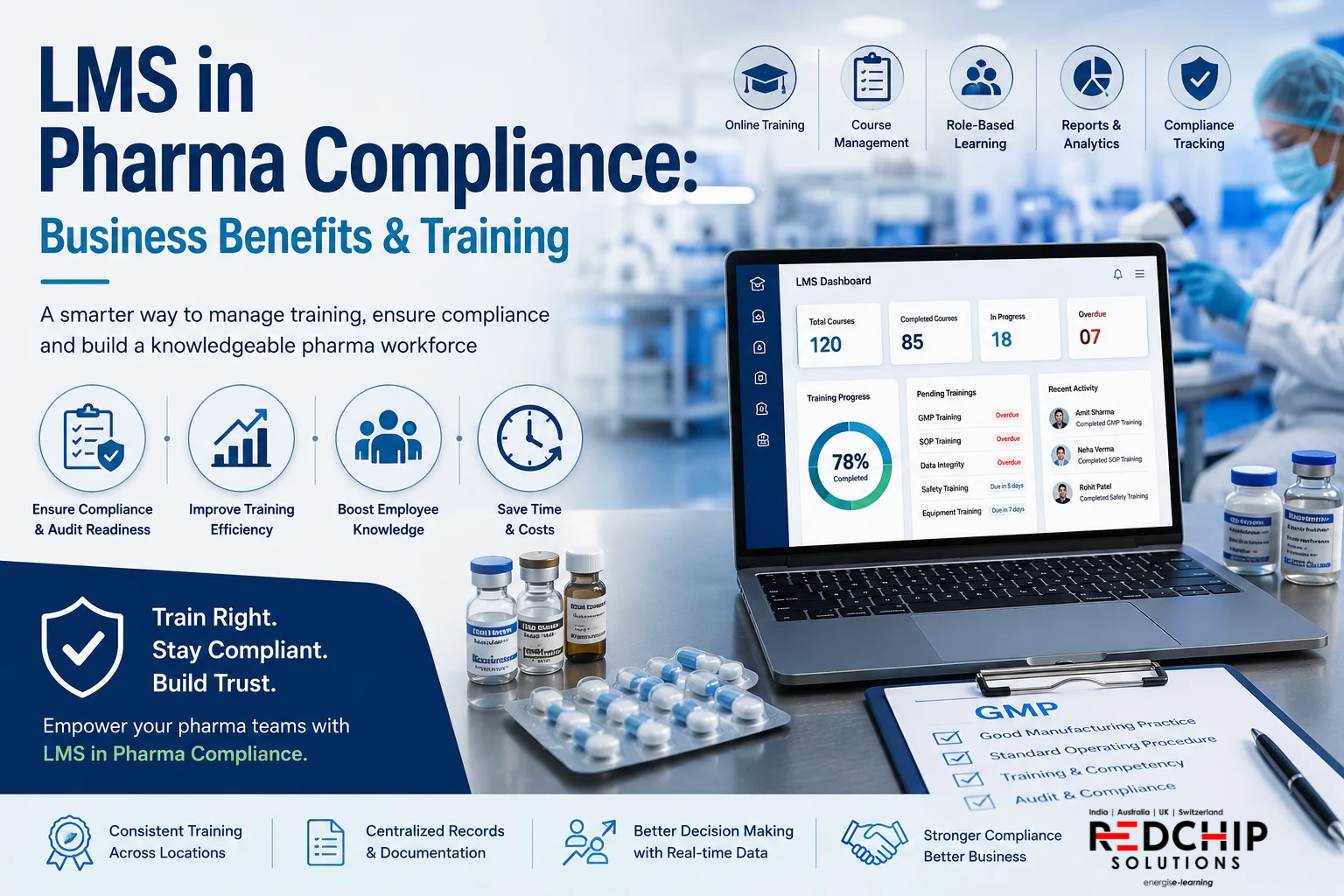
LMS in Pharma Compliance helps pharmaceutical companies manage employee training, track learning progress, maintain training records and support consistent learning across departments. A well-planned Learning Management System helps employees understand the procedures, quality standards and responsibilities linked to their jobs. However, managing training across production, quality, packaging, laboratory, warehouse and office teams can become difficult as companies grow.
A Learning Management System (LMS) brings these activities together. Instead of relying on spreadsheets, emails and manual follow-ups, companies can use a central platform to assign courses, monitor completion and access reports. As a result, pharma compliance training becomes easier to organize and manage.
Explore how Red Chip Solutions can support pharmaceutical organizations with customized eLearning, LMS implementation and employee training solutions designed around their operational and learning requirements.
What This Guide Covers
This guide explains how a Learning Management System can improve pharmaceutical employee training, simplify compliance learning and help organizations manage training activities more effectively.
Here is what you will find:
- Why pharmaceutical companies need an LMS for compliance training
- How a Learning Management System manages employee learning
- How role-based learning helps reduce training gaps
- The business benefits of LMS in Pharma Compliance
- Important features to consider when selecting a pharma LMS
- How interactive learning can improve employee engagement
- How to measure the value of an LMS investment
- Steps to build an effective pharma training program
- How Red Chip Solutions supports pharmaceutical eLearning requirements
Why LMS in Pharma Compliance Matters
Pharmaceutical companies have several employee training requirements. Depending on their responsibilities, employees may need GMP training, SOP training, safety training, data integrity training, equipment training and quality awareness.
Therefore, organizations need a structured way to manage these learning activities. An LMS in Pharma Compliance helps training teams organize courses, assign learning based on job roles and maintain access to training information.
As companies grow, managing these requirements manually can take considerable time. Training teams may need to send reminders, collect records, check completion status and prepare reports. Meanwhile, employees working across different shifts or locations may have different training needs.
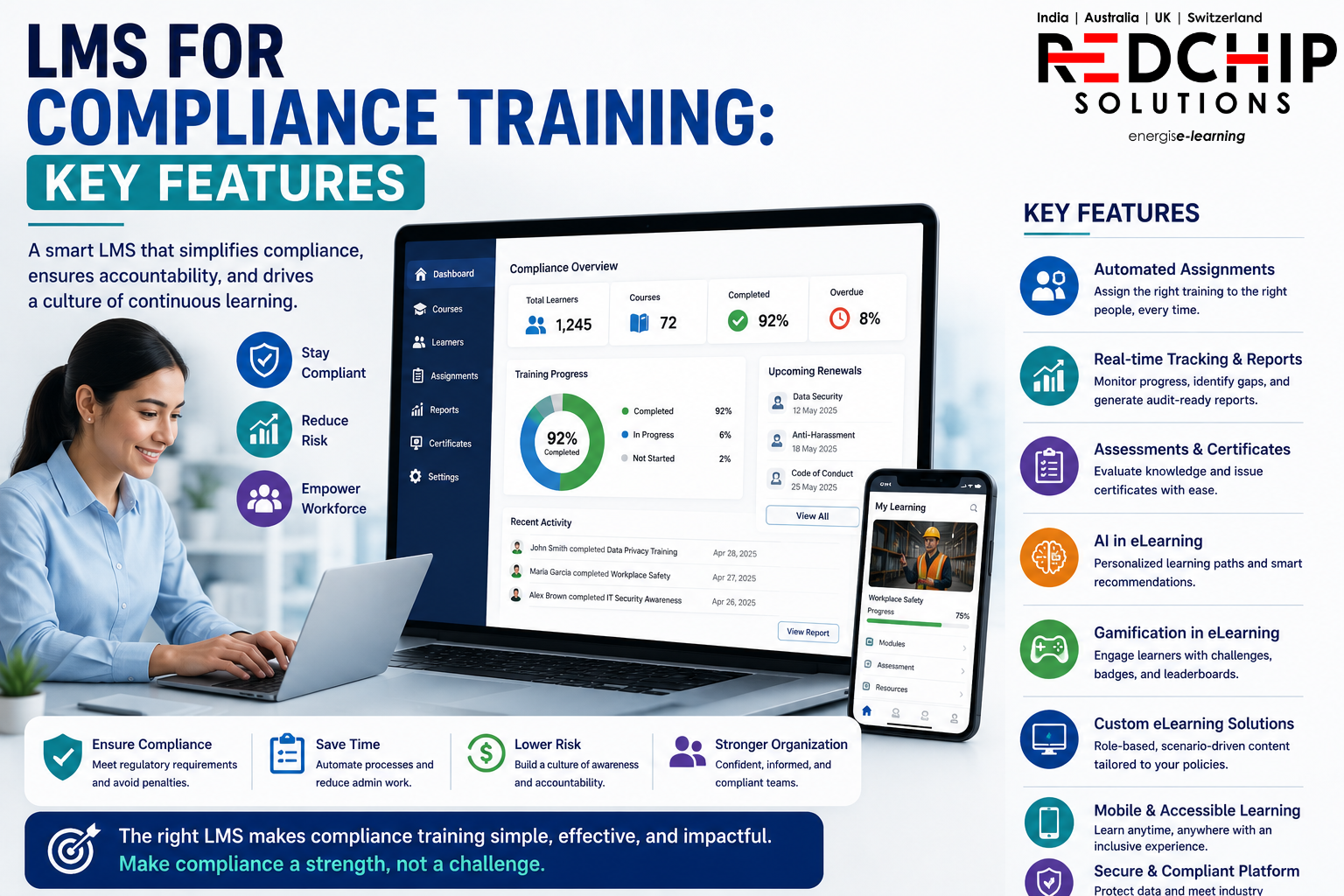
A centralized Learning Management System helps bring these activities into one place. Training teams can assign courses, set deadlines, monitor completion and review reports. Consequently, managers get better visibility into employee training without depending on several separate files.
For example, when a new SOP is introduced, the company can identify the employees who need to understand it, assign the relevant training and monitor completion. This creates a more organized process for managing procedure-related learning.
How a Learning Management System Helps Manage Pharma Compliance Training
A Learning Management System supports pharmaceutical training by helping companies manage course assignments, learning activities and training records in a structured manner.
For instance, training can be assigned according to department, job role, location or responsibility.
- Production operators may need manufacturing procedure training.
- Quality teams may require learning related to documentation, inspections and quality processes.
- Laboratory employees may need training on testing procedures and equipment.
- Warehouse employees may require material handling and storage training.
- Packaging teams may need instruction on packaging procedures and quality checks.
In addition, refresher courses can be planned to help employees remain familiar with relevant procedures.
Managers can review overdue training and follow up with employees. As a result, training teams can identify gaps sooner and take appropriate action.
An LMS can also support assessments, refresher training and reporting. However, using an LMS alone does not guarantee regulatory compliance. Organizations must ensure that their training content, procedures, system controls and records meet the requirements applicable to their operations.
Learning Management System for Corporates: Making Training Easier
A Learning Management System for Corporates can help pharmaceutical companies manage employee development as their workforce and training requirements grow.
Instead of handling learning separately across departments, organizations can use a central platform to manage:
- Mandatory employee training
- Course assignments and deadlines
- Training reminders
- Online assessments and quizzes
- Employee training records
- Refresher courses
- Department-wise reports
- Multi-location training
- Learning progress tracking
In addition, HR, Quality and Learning & Development teams can get better visibility into training activities. This makes it easier to identify pending courses, review completion and plan future learning.
For companies with multiple departments or manufacturing locations, centralized learning management can reduce manual coordination and support a more consistent employee training experience.
Business Benefits of LMS in Pharma Compliance
The business value of LMS in Pharma Compliance training goes beyond course completion. A well-planned system can improve training operations and reduce the effort involved in managing employee learning.
1. Less Manual Work for Training Teams
Training teams often spend hours sending reminders, checking spreadsheets, collecting attendance and preparing reports. However, an LMS can automate many of these routine activities.
Consequently, teams can spend more time reviewing training needs, improving course content and supporting employee development.
2. Better Visibility into Training Status
Managers can review employee learning progress by department, location, course or individual employee. These reports help identify pending courses and follow up before training deadlines become a concern.
3. Consistent Training Across Locations
Pharmaceutical companies may operate several plants, laboratories, offices or warehouses. A Learning Management System for Corporates can help deliver common training content across locations while supporting role-specific learning where required.
This is particularly useful when employees need to understand similar quality standards and procedures across different facilities.
4. Easier Reporting and Record Management
Training reports help organizations prepare for internal reviews and quality assessments. In addition, an organized record management process makes it easier to retrieve relevant training information when required.
The FDA provides information on GMP records and reports, including how records should be maintained and made available for review.
Read more: FDA – Questions and Answers on CGMP Requirements: Records and Reports.
5. Better Employee Learning Experience
Employees can access learning material, complete assessments and revisit courses when permitted. Moreover, interactive eLearning content can make complex procedures easier to understand.
As a result, employees get a more structured learning experience while training teams can monitor progress through the LMS.
What Features Should a Pharma LMS Include?
Before investing in a Learning Management System, companies should consider their actual training requirements rather than choosing a platform based only on the number of features.
A suitable LMS for pharmaceutical training may include:
| LMS Feature | Business Value |
|---|---|
| Role-based course assignment | Employees receive training relevant to their work |
| Training reminders | Helps reduce overdue training |
| Assessments and quizzes | Checks employee understanding |
| Training reports | Gives managers better visibility |
| Course completion tracking | Helps monitor learning progress |
| Refresher training | Supports ongoing learning |
| Mobile-friendly access | Makes learning more flexible |
| Multi-location management | Supports distributed teams |
| Course management | Helps organize training content |
| Integration options | Supports existing systems where required |
For pharmaceutical organizations, system requirements should also be reviewed by Quality, IT and compliance teams.
If electronic records are used to meet regulatory record requirements, the organization should assess applicable controls and requirements for its intended use.
For further reading, see the FDA guidance on Part 11 – Electronic Records and Electronic Signatures.
Improving Employee Engagement in Pharma Compliance Training
Compliance training does not need to feel like a long reading exercise. Interactive eLearning can introduce practical activities that encourage participation and make learning more engaging.
For example, a GMP course could include a workplace scenario in which employees identify a documentation error, select the correct action or answer questions based on a quality situation.
Other useful approaches include:
- Scenario-based learning
- Interactive decision-making
- Knowledge challenges
- Progress indicators
- Short quizzes
- Feedback after each answer
These activities can help employees apply what they learn to workplace situations.
However, interactive learning should be used carefully in pharmaceutical training. The goal is to help employees understand procedures and make correct decisions, rather than simply earn points or finish courses quickly.
How to Build an Effective Pharma Compliance Training Program with an LMS
Choosing the right platform is only one part of the process. Companies also need a clear training plan to make their LMS investment useful.
Step 1: Identify Training Requirements
Start by listing the training required for different departments, job roles and responsibilities. This helps ensure that employees receive learning relevant to their work.
Step 2: Map Courses to Employee Roles
Create learning paths for production, quality, laboratory, warehouse, packaging, maintenance and other teams as applicable.
Role-based learning makes it easier to assign relevant courses instead of providing every employee with the same training.
Step 3: Develop Relevant eLearning Content
Use existing SOPs, policies and training documents as source material. Then convert them into structured courses with clear explanations, examples and assessments where appropriate.
Step 4: Assign and Track Learning
Set training deadlines, assign courses and use LMS reports to monitor completion. In addition, follow up on pending activities to keep employee training on track.
Step 5: Review and Improve
Regularly review course content, completion reports, assessment results and feedback. When procedures change, review the affected training and update it through the company’s approved process.
Measuring the ROI of a Learning Management System for Corporates
When evaluating the business case for LMS in Pharma Compliance training , companies should look at the time and effort involved in managing training activities today.
For example, a company may spend several hours checking completion sheets, sending reminders, preparing reports and coordinating training sessions. A centralized LMS can help reduce these manual activities through course tracking and reporting.
The business value can be assessed through practical measures such as:
- Time spent managing employee training
- Number of overdue training assignments
- Training completion rates
- Assessment performance
- Time taken to assign updated courses
- Effort required to prepare training reports
- Employee access to learning resources
These measures give management a better way to understand whether the Learning Management System is improving training operations.
Instead of looking only at software costs, companies can also consider time saved, improved visibility and the ability to manage learning at scale.
Choosing the Right LMS in Pharma Compliance
Choosing the right LMS in Pharma Compliance training requires more than comparing software features. Companies should review their training needs, employee roles, reporting requirements, course management needs and quality processes.
Meanwhile, a Learning Management System for Corporates should be flexible enough to support future growth and changing training requirements.
Before selecting a provider, consider these questions:
- Can training be assigned according to employee roles?
- Can managers track progress and overdue courses?
- Can the LMS provide useful training reports?
- Can existing training content be uploaded or converted?
- Can the system support multiple locations and departments?
- Can it support assessments and refresher training?
- What system controls, validation support and documentation are available for the intended use?
- Can the platform grow as training requirements change?
Ultimately, a careful review helps avoid selecting a platform that looks good during a demonstration but becomes difficult to use in daily operations.
How Red Chip Solutions Supports Pharma eLearning and LMS Requirements
Red Chip Solutions helps organizations develop digital learning experiences that support employee training, knowledge sharing and workforce development.
For pharmaceutical companies, training solutions can be designed around specific job roles, procedures, business needs and learning goals. This approach helps organizations create learning experiences that are relevant to their employees and operational requirements.
Our solutions can include:
- Custom eLearning content development
- SOP-based learning modules
- Interactive assessments
- Scenario-based training
- Gamification in eLearning
- LMS implementation and learning management support
- Role-based training programs
- Multilingual eLearning
- Learning reporting and progress tracking
The approach is to understand the client’s training challenge first and then develop a learning solution that fits the requirement.
For example, this may involve converting existing documents into eLearning courses, developing interactive learning modules or using an LMS to help manage employee training across the organization.
You can explore the Red Chip Solutions Portfolio to see examples of our learning solutions and work.
Conclusion: Why LMS in Pharma Compliance Is a Business Investment
LMS in Pharma Compliance can help pharmaceutical companies bring employee training, course assignments, assessments and reporting into a more organized process. A suitable Learning Management System can reduce manual effort, improve visibility into learning progress and support consistent training across departments and locations.
A Learning Management System for Corporates becomes especially valuable when training requirements grow, employees work across multiple locations and learning activities become harder to manage manually.
However, the real value comes from combining the right platform with relevant eLearning content, clear processes and regular review. For pharmaceutical companies, investing in an LMS is not simply about moving training online. Instead, it is about building a more structured, accessible and measurable learning process that supports employees in performing their jobs correctly.
Looking to improve compliance training with eLearning and an LMS? Red Chip Solutions can help you plan, develop and deliver digital learning solutions suited to your organization’s training needs.
Requesting for a Demo to discuss your pharmaceutical training requirements and explore how custom eLearning and LMS solutions can support your workforce.