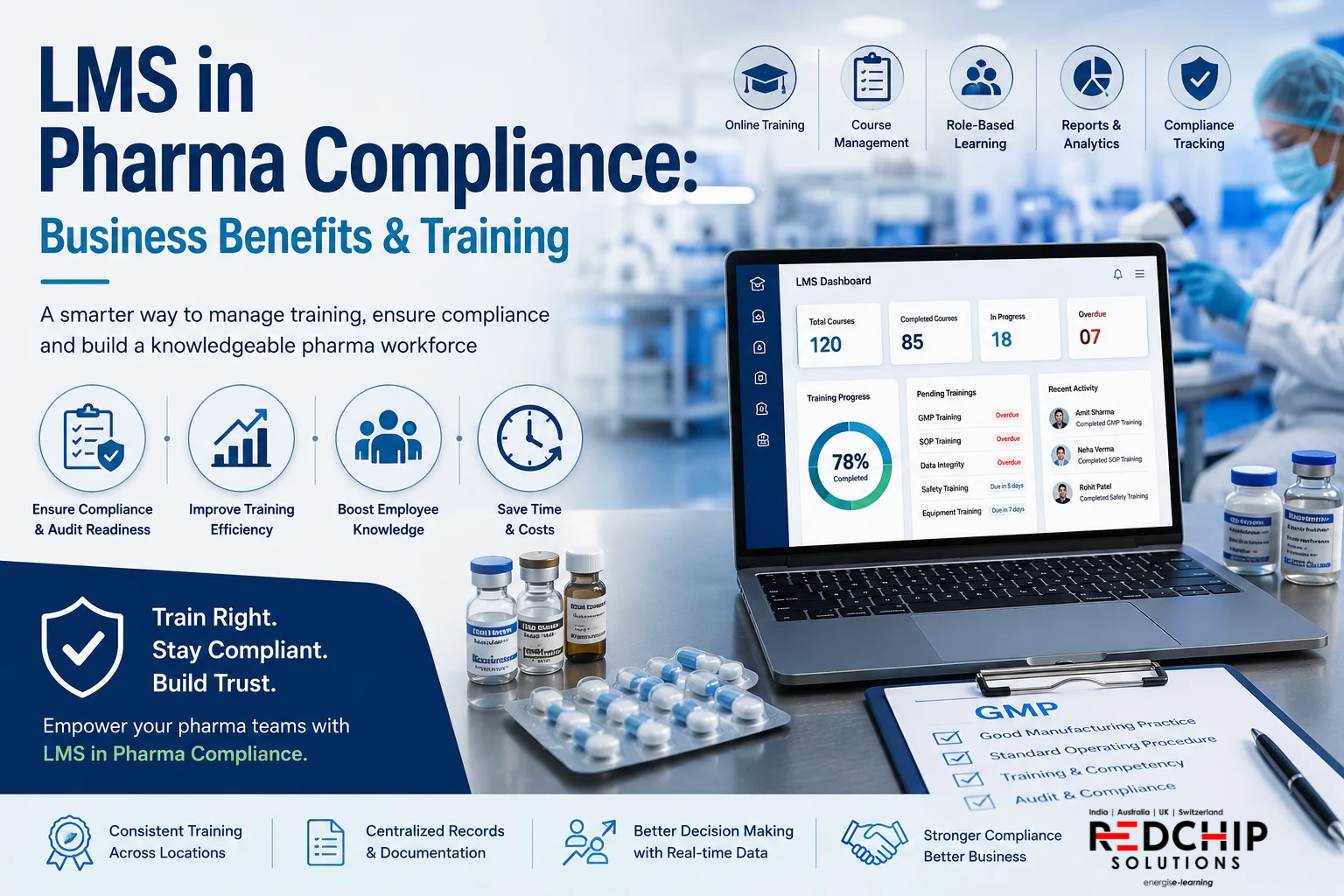

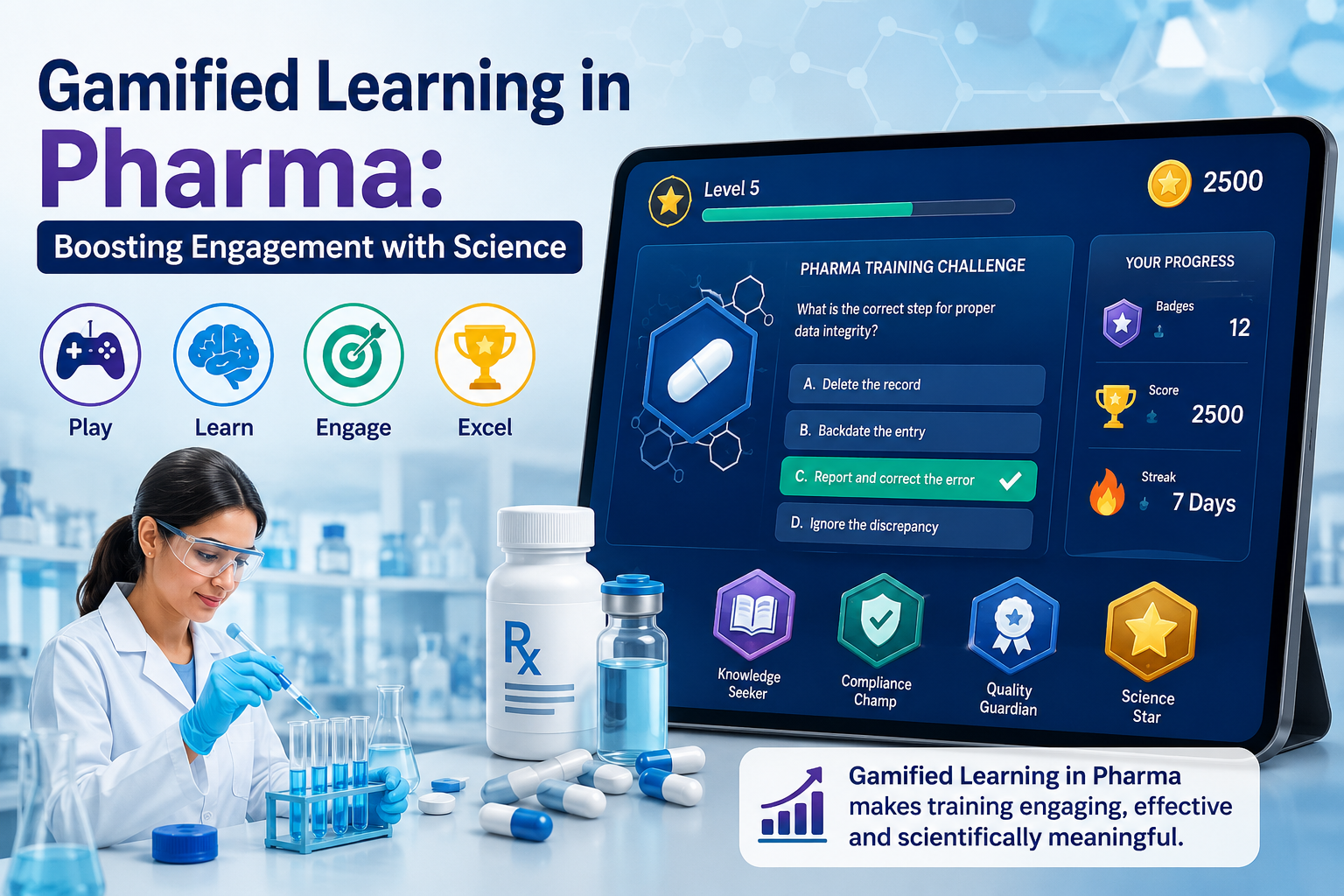
Gamified Learning in Pharma is helping pharmaceutical companies rethink how they train employees, improve participation and support better learning. From GMP training and SOP learning to quality, safety and data integrity, pharma employees need to understand important information and apply it correctly at work. However, long presentations, repeated slides and document-based training can make it difficult to keep learners interested.
This is where Gamification, Pharma eLearning and science-based learning design can make a difference. By using challenges, decision-making activities, feedback, progress and interactive scenarios, companies can make training more active and meaningful. The aim is not to turn compliance training into entertainment. Instead, it is to use proven learning principles to help employees understand, practise and remember important information.
Requesting for a Demo You can see how Red Chip Solutions develops pharma-focused digital learning experiences that turn SOPs, quality processes and employee training requirements into clear, interactive courses that help learners practise workplace decisions and understand important procedures.
What This Guide Covers About Gamified Learning in Pharma
This guide explores how Gamified Learning in Pharma can help address employee engagement challenges and improve the training experience through practical learning design.
Here is what you will find:
- Why traditional pharma training may lose employee attention
- The science behind Gamification and active learning
- How Gamified Learning in Pharma can improve participation
- Practical examples of gamified GMP, SOP and quality training
- How Pharma eLearning can move beyond slides and PDFs
- How to select the right eLearning Provider
- What to expect from an eLearning vendor
- How to measure learning outcomes and training effectiveness
- How Red Chip Solutions can support pharmaceutical learning
Why Gamified Learning in Pharma Is Becoming Important
Pharmaceutical companies work in an environment where employee knowledge, process understanding and attention to detail matter. Employees may need to follow standard operating procedures, identify risks, complete documentation correctly and understand quality requirements.
However, traditional training often relies on slides, reading material and long assessments. While these methods can deliver information, they may not always encourage employees to actively think about how the knowledge applies to their work.
Gamified Learning in Pharma can address this challenge by asking employees to make decisions, solve problems and receive feedback during the learning process.
For example, instead of reading ten slides about documentation errors, an employee could review a workplace scenario, identify the error and select the correct action. This makes learning more practical and gives employees a chance to apply what they have learned.
Moreover, employees can practise in a learning environment before facing similar situations at work. This is especially useful when the activities are based on approved procedures and real workplace challenges.
The Science Behind Gamification in Pharma eLearning
Gamification uses game-like elements in a learning activity. These may include points, levels, progress bars, challenges, rewards, feedback and decision-making activities.
The science behind effective Gamified Learning is not simply about adding points or badges. Instead, it is about encouraging learners to participate, practise, receive feedback and improve over time.
1. Active Participation Helps Learners Think
When employees actively answer questions or make decisions, they do more than read information. They have to think about the content and connect it to what they already know.
For example, an SOP training module could present a situation where an employee needs to select the correct next step. This helps turn passive learning into active participation.
2. Feedback Helps Employees Learn from Mistakes
Feedback is an important part of learning. When employees select an incorrect answer, the course can explain why it is wrong and what the correct action should be.
Therefore, a well-designed Pharma eLearning course should not simply show a score at the end. It should provide useful feedback throughout the learning journey.
3. Challenges Can Encourage Motivation
Small challenges can encourage employees to continue learning. A course can begin with simple questions and gradually move to more complex workplace situations.
As a result, employees can build confidence while improving their understanding.
4. Progress Gives Learners a Sense of Achievement
Progress indicators, milestones and levels can show employees how far they have come. In addition, completing a challenge or learning section can give them a clear sense of achievement.
However, these elements should support the learning goal rather than distract from it.
Research also supports exploring Gamification in pharmacy education, while highlighting the importance of designing activities around clear learning outcomes and measuring their effectiveness.
Read the research: Gamification in Pharmacy Education – A Systematic Quantitative Literature Review.
How Gamified Learning in Pharma Can Improve Employee Engagement
Gamified Learning in Pharma can make routine training more interactive and easier to follow. Instead of completing a course only to meet a requirement, employees can participate in activities that relate to their actual work.
For example, training can include:
- Interactive workplace scenarios
- Decision-making activities
- Knowledge challenges
- Short quizzes
- Progress tracking
- Levels and milestones
- Feedback after each response
- Case-based learning
These elements can be used in GMP training, SOP training, safety learning, data integrity, equipment training and quality awareness.
Moreover, employees can practise responding to situations in a learning environment before they face similar situations at work. This makes training more useful when the scenarios are based on real tasks and approved procedures.
Gamification can also encourage participation in refresher training. Rather than repeating the same format every time, companies can introduce new cases, questions and challenges while keeping the learning objectives consistent.
Practical Examples of Gamification in Pharma Training
The best Gamification strategy is based on the training objective. A game should help employees learn a procedure, understand a risk or make a better decision.
GMP Training: Find the Compliance Error
Employees are shown a workplace situation involving a documentation or process issue. They must identify the error and choose the correct action.
The course provides feedback explaining why the choice matters. This helps employees understand the procedure instead of simply memorizing a rule.
SOP Training: Choose the Correct Process
An employee moves through a series of steps related to an SOP. At each stage, they select the correct action from the available options.
If the employee makes a mistake, the module explains the correct step and allows them to try again. Therefore, the activity becomes a practice opportunity rather than just a test.
Data Integrity Training: Spot the Mistake
Learners review a sample record or workplace situation and identify missing, incorrect or incomplete information.
This type of interactive learning can help employees practise attention to detail and understand the importance of accurate records.
Safety Training: Make the Right Decision
Employees are presented with a workplace safety situation and must select the correct response. Each choice leads to feedback that explains the possible outcome.
This makes Pharma eLearning more practical because employees work through examples instead of only reading information.
Pharma eLearning: Moving Beyond Slides and PDFs
Pharma eLearning does not have to be limited to recorded presentations or slide-based courses. Companies can convert existing SOPs, policies, manuals and training documents into more engaging digital learning experiences.
A well-designed course may combine:
- Short text and clear visuals
- Voice-over narration
- Interactive questions
- Workplace scenarios
- Animations
- Knowledge checks
- Assessments
- Gamified activities
However, the learning content must remain accurate. In pharma training, game elements should never change the meaning of a procedure or encourage employees to take shortcuts.
The course design should also make it easy for employees to understand the learning objective, practise the correct action and receive clear feedback.
For example, an eLearning course on handling deviations could include a short workplace scenario, a decision point, feedback and a final knowledge check. This helps learners understand the process in context.
Choosing the Right eLearning Provider for Pharma
Choosing an eLearning Provider is an important decision for pharmaceutical companies. The provider should understand that pharma training is not just about creating attractive screens. It requires accurate content, clear learning objectives, suitable assessments and an understanding of the employee’s work.
Before selecting an eLearning Provider, consider the following:
- Can they convert SOPs and existing documents into interactive courses?
- Can they create role-based learning?
- Do they understand compliance-focused training?
- Can they build practical scenarios and assessments?
- Can they support multilingual learning?
- Can they develop content that works on an LMS?
- Can they revise courses when procedures change?
- Can they provide examples of relevant eLearning work?
A suitable provider should ask about your training goals, audience, procedures and challenges before suggesting a solution.
Moreover, they should understand the difference between a visually attractive course and a course that supports the correct learning outcomes. This is particularly important in pharmaceutical learning, where employees need to understand and follow approved processes.
What to Look for in an eLearning Vendor
An eLearning vendor should offer more than content production. Companies need a partner who can understand the training problem and suggest a suitable learning approach.
For example, if employees are not remembering SOP steps, the solution may involve scenario-based learning and practice. If training is difficult to manage across locations, an LMS may also be required.
Therefore, when evaluating an eLearning vendor, look for:
- Instructional design expertise
- Custom eLearning development
- Interactive course design
- Gamification capabilities
- LMS compatibility
- Quality review and testing
- Content updates and maintenance
- Clear communication and project support
The right eLearning vendor should focus on improving the learning experience and meeting business requirements, rather than simply delivering a course file.
In addition, a good vendor should help you decide which training topics need interactive activities and which may be better suited to simple, clear learning formats. Not every course needs Gamification.
How to Measure Gamified Learning in Pharma Effectiveness
Gamified Learning in Pharma should be measured using meaningful learning and business indicators. Engagement alone is not enough. Companies should also check whether employees understand the content and can apply it correctly.
Useful measures may include:
- Course completion rates
- Assessment scores
- Improvement between first and final attempts
- Knowledge retention through follow-up assessments
- Time taken to complete learning
- Employee feedback
- Reduction in repeated training gaps
- Performance in relevant workplace assessments
For example, if a gamified SOP course improves assessment results but employees still make the same mistakes at work, the course may need further improvement.
In contrast, if employees demonstrate better understanding, perform well in assessments and apply procedures correctly, the training may be delivering stronger value.
Therefore, organizations should review both learner feedback and performance data when evaluating the impact of Gamification.
How Red Chip Solutions Supports Pharma eLearning and Gamified Learning
Red Chip Solutions develops customized digital learning solutions that help organizations make employee training more engaging, structured and effective.
Our approach combines learning objectives, instructional design and interactive content to create courses that suit the audience and business requirement.
For pharmaceutical organizations, our solutions can include:
- Custom Pharma eLearning development
- SOP-based digital learning
- GMP training modules
- Interactive assessments
- Scenario-based learning
- Gamified learning experiences
- Multilingual eLearning
- LMS implementation and learning support
As an eLearning Provider, our focus is on understanding the training challenge before recommending the solution. Whether the requirement is to convert documents into eLearning, create interactive training or improve an existing learning program, the content is planned around employees and the intended learning outcome.
You can explore the Red Chip Solutions Portfolio to see examples of our learning solutions and work.
Conclusion: Gamified Learning in Pharma Makes Training More Meaningful
Gamified Learning in Pharma offers a practical way to make employee training more active, engaging and relevant. By combining science-based learning methods with interactive challenges, scenarios, feedback and progress, pharmaceutical companies can create training experiences that go beyond reading slides and completing quizzes.
However, Gamification works best when it is planned around clear learning goals. It should help employees understand procedures, practise decisions and improve their knowledge not distract them from the importance of compliance.
With the right Pharma eLearning approach and an experienced eLearning Provider or eLearning vendor, companies can make training more useful for employees while supporting their wider learning and quality goals.
Looking to make pharma training more engaging and effective? Red Chip Solutions can help you develop customized eLearning, interactive courses and Gamified Learning experiences suited to your workforce.
Requesting for a Demo to discuss your training requirements and explore how Red Chip Solutions can support your Pharma eLearning journey.